Jacques Derrida’s hauntology describes how the present is haunted by the ghosts of the past—specifically unfulfilled promises and lost futures. In the context of consumerism, this concept explains how modern capitalism commodifies nostalgia, recycling defunct cultural aesthetics and "lost futures" to trap society in a loop of endless, hollow consumption. The word "pornography" was coined in the 1850s, deriving from the French pornographie and Greek pornographos, which literally meant "writing about prostitutes" (from pornē meaning "prostitute" and grapheinmeaning "to write")

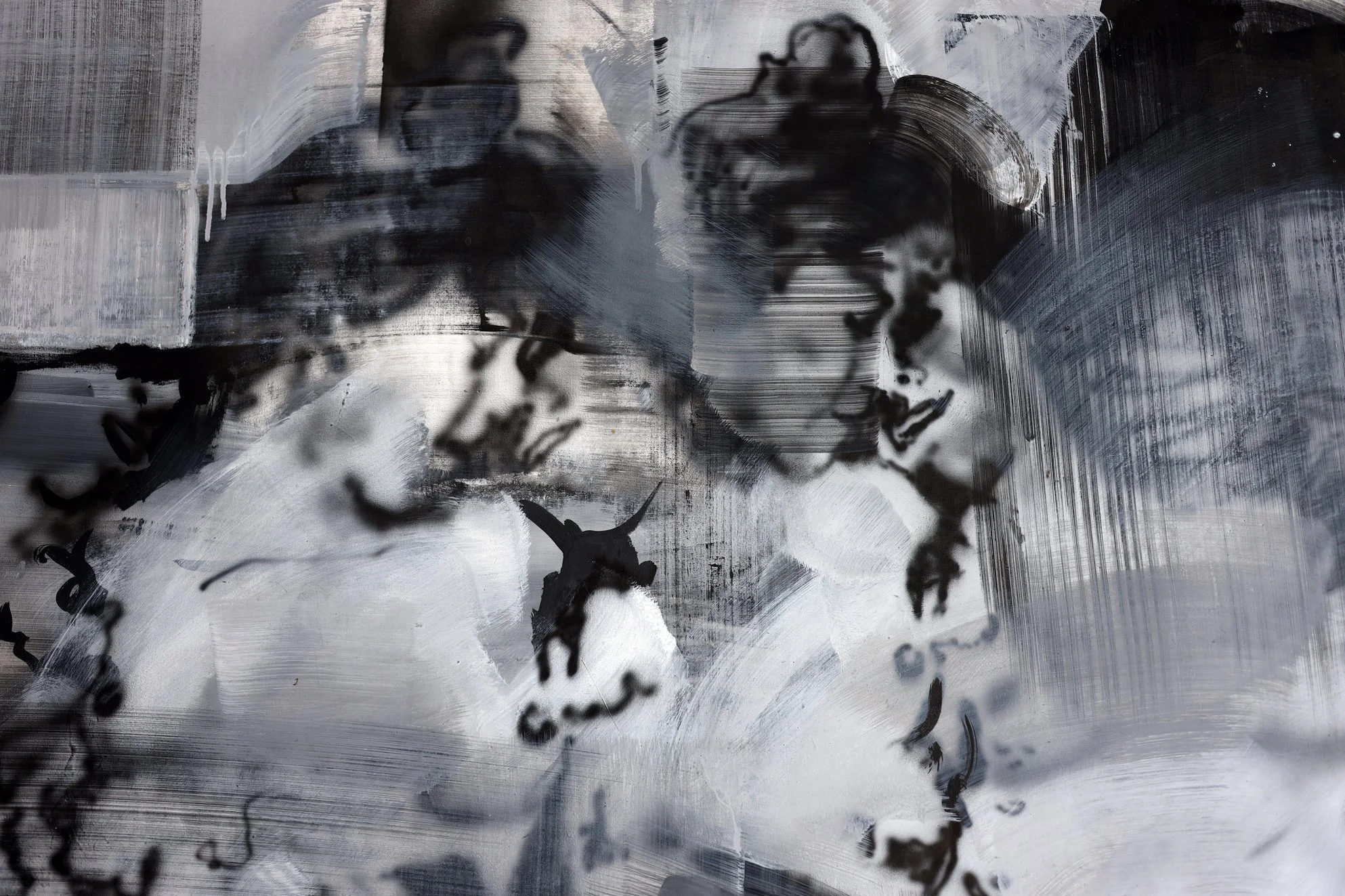
Acrylic, oil, spray paint and dye on canvas
300cmx220cm
2025
A direct quote, a promise made to customers by the proprietor of a ‘synthetic brothel’ in Tokyo where A.i powered silicone sex dolls were the main attraction. In literature and film, the robot brothel is a recurring sci-fi trope that explores the intersection of technology, intimacy, and morality. Writers and directors use these artificial pleasure hubs to critique human exploitation, examine the nature of consent, and question what ultimately defines human consciousness and empathy.
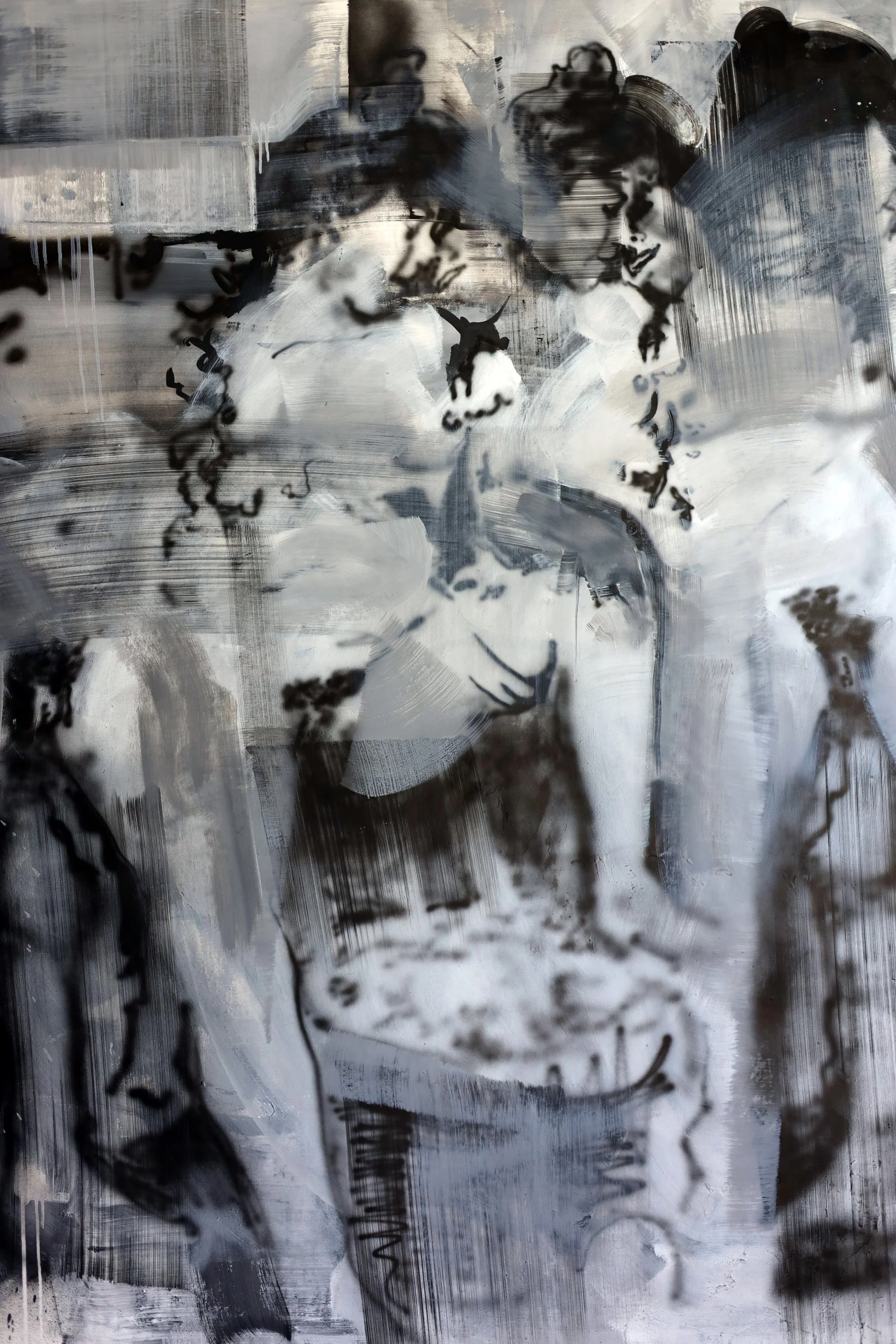
- Realistic Body Painting Veins and Freckles, Gel Breasts, Built-in Tongue, EVO Skeleton, Standing Feet, 50% Movable Eyelids. Silicone Sales - Implanted eyebrow & eyelash, Veined Eyes, EVO Skeleton, Hard Feet and Hand, Ultra-Flex Fingers, Articulated Fingers, Gel Breasts, Realistic Body Painting and 50% off Gel Ass, Bikini Tan Line, Movable Jaw and an extra head.
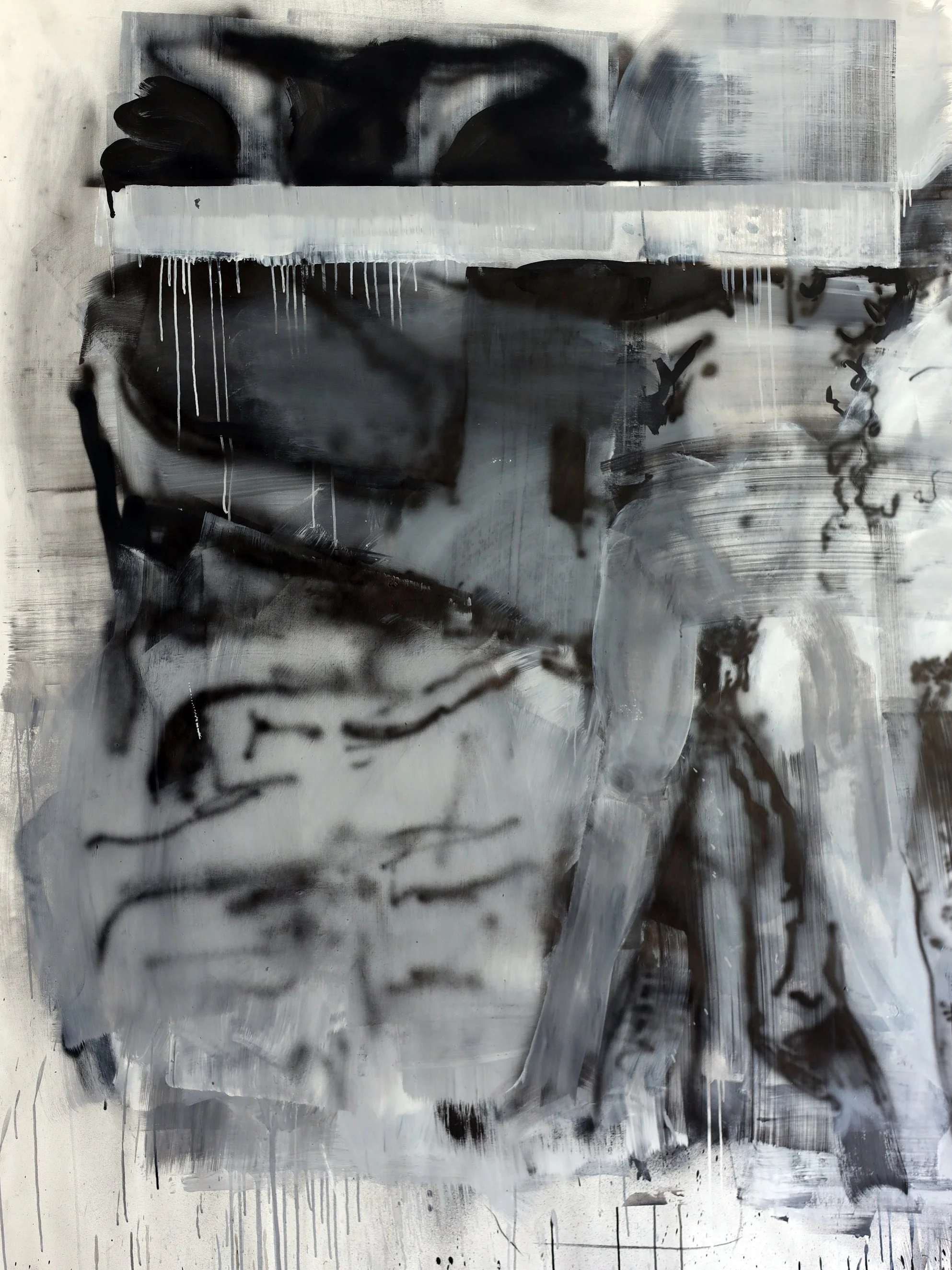
In literature and cinema android brothels often become sites of awakening, where artificial workers develop sentience, emotion, or strategies of self-preservation. Here, the brothel is not only a space of exploitation but also a possible crucible for rebellion. The concept of ‘a Cybrothel’ provides a framework for examining the erosion of empathy, the commodification of intimacy, and patriarchal structures that normalise the objectification of bodies.
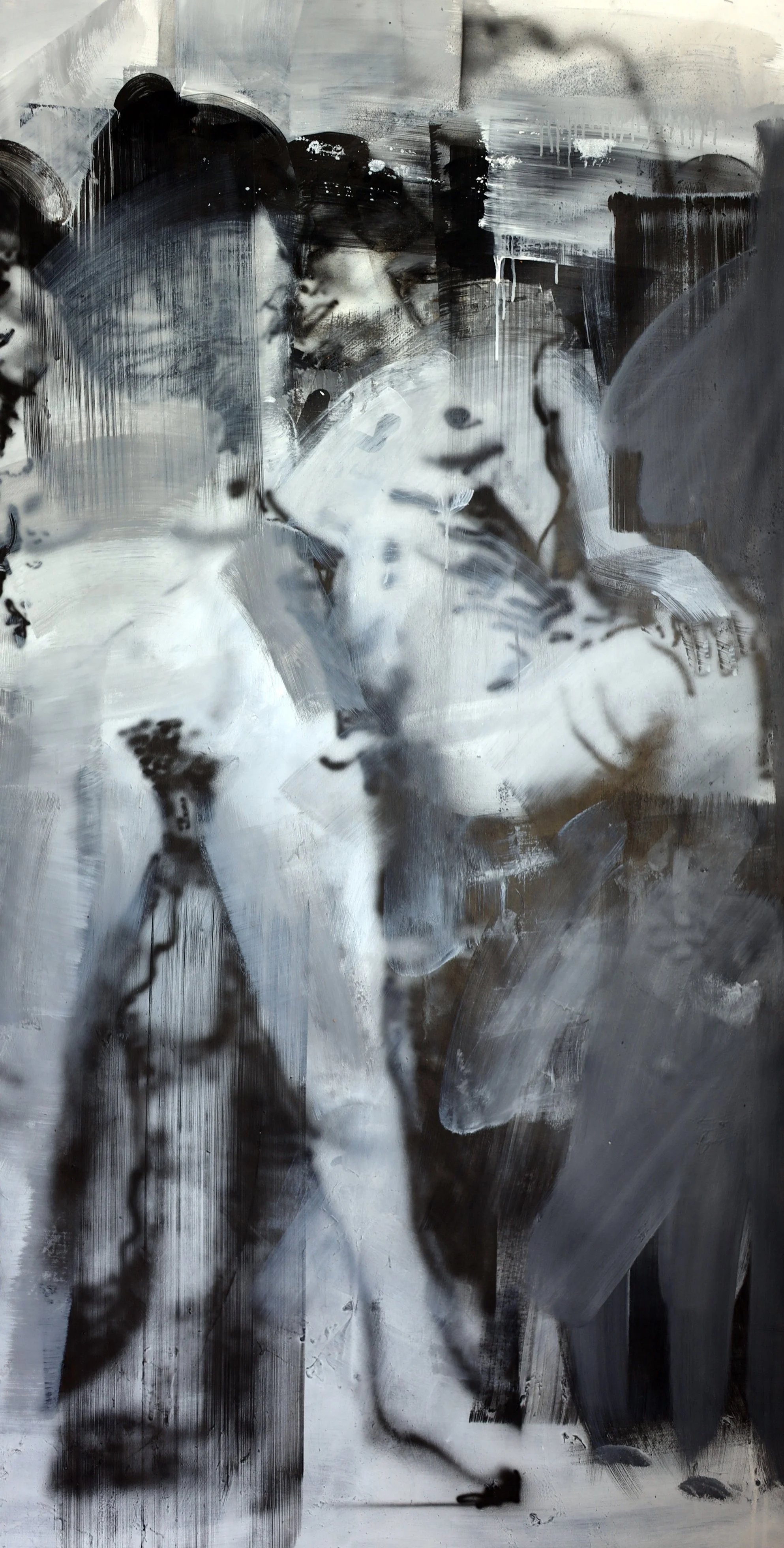
Municipalities worldwide are forced to draft entirely new legislation to govern these businesses. For instance, the Houston City Council notably banned a proposed sex robot testing center from opening by passing an ordinance prohibiting sexual contact with anthropomorphic objects on commercial properties.
Ethics of Objectification: Critics, such as campaigners at De Montfort University, argue that the commodification and use of highly anthropomorphic, submissive machines reinforce harmful gender inequalities. They argue this promotes a non-empathetic, consumerist view of human beings and sexuality.

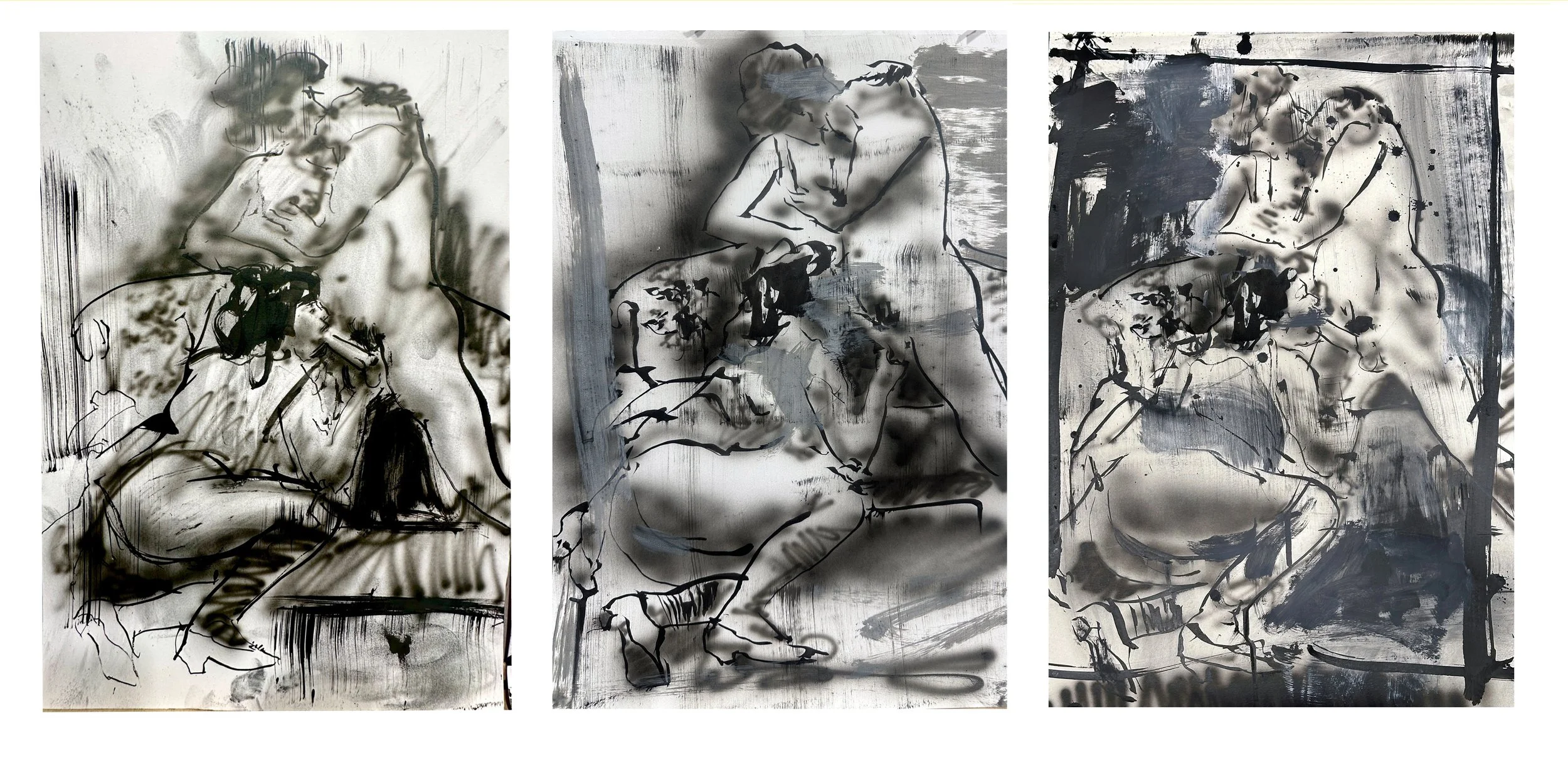
ink and spray paint on paper
300cmx220cm
2025

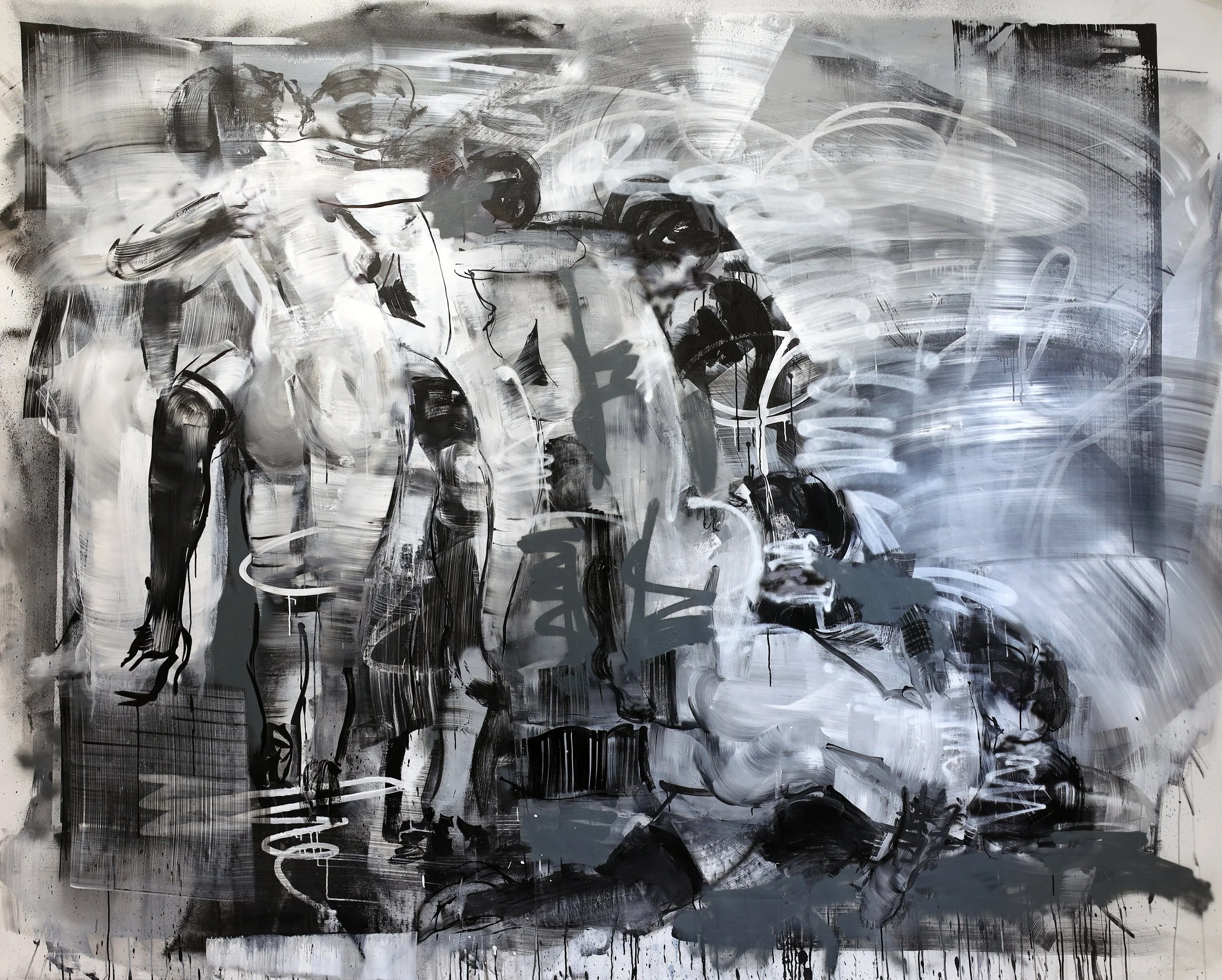
Acrylic, ink and spray paint on canvas
300cmx240cm
2025


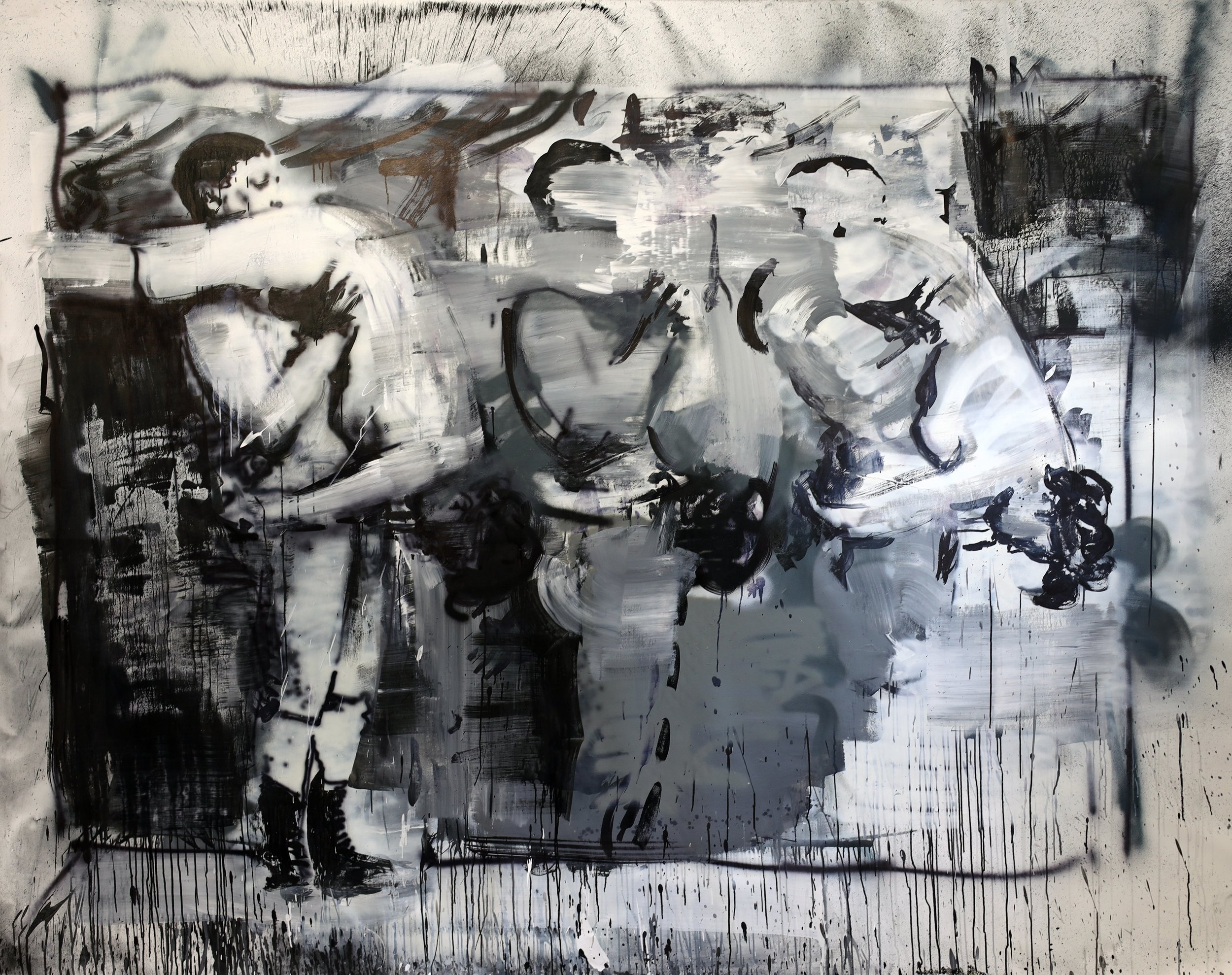
Acrylic, oil, spray paint and dye on canvas
300cmx240cm
2025
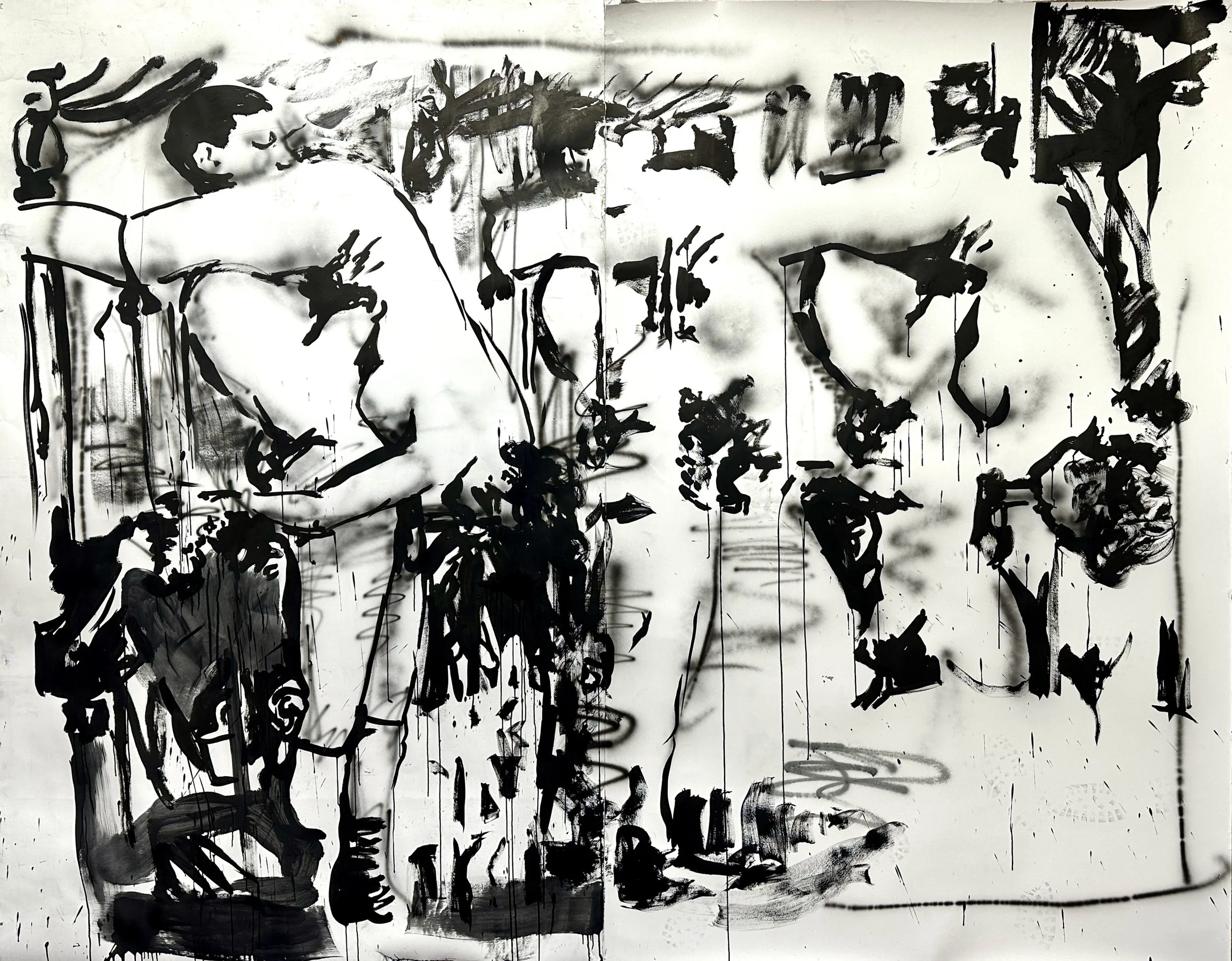
300cmx240cm
ink and spray paint ion paper
2025

‘Hauntology’ in art and music describes work that evokes a melancholic or eerie feeling of lost time.
Francis Fukuyama asserted that capitalism and consumerism had conclusively triumphed over other political-economic systems and reached the "end of history".
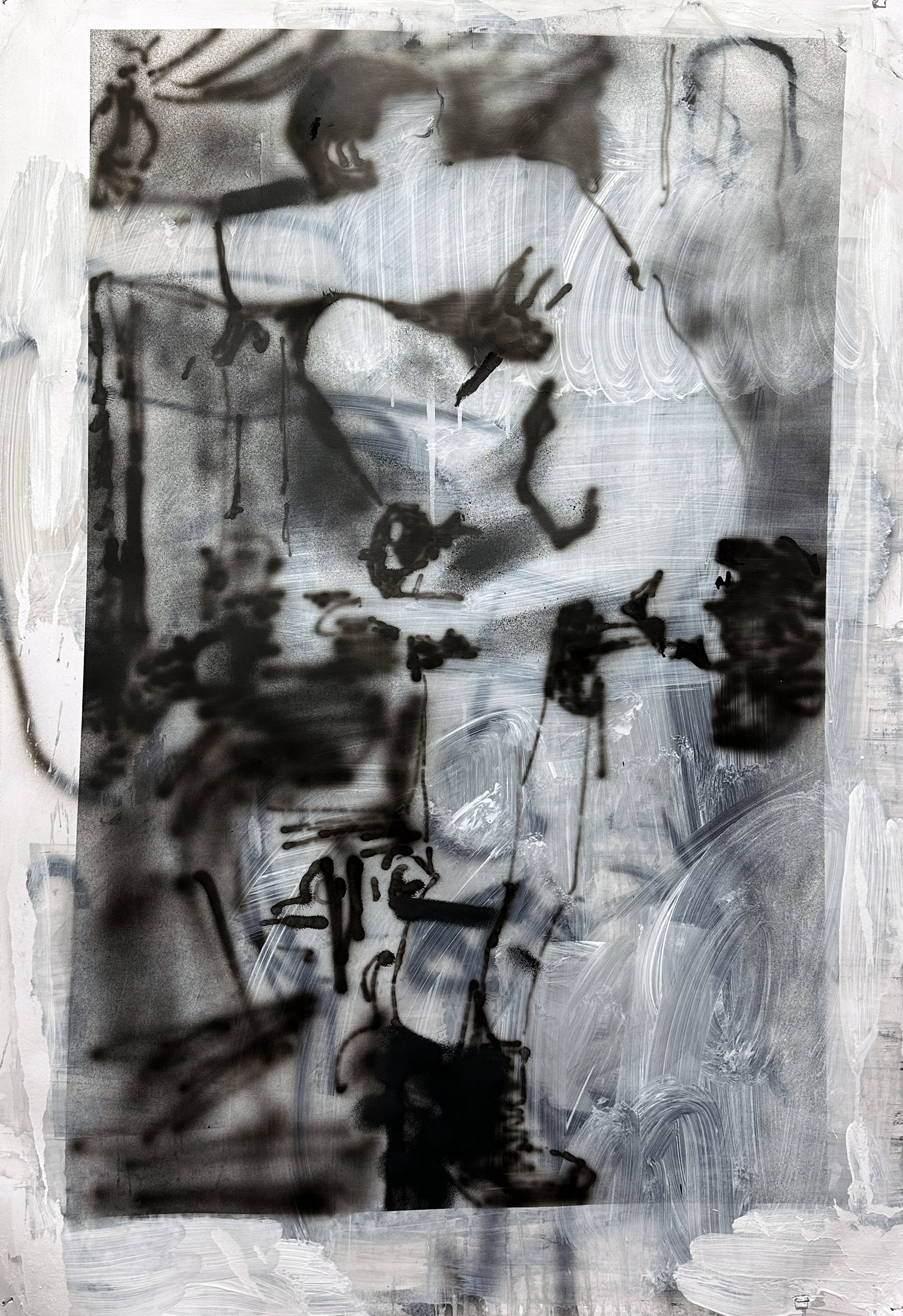
The term was later popularized in the 2000s by British cultural theorist Mark Fisher and music journalist Simon Reynolds. They applied it to explain a sense of cultural stagnation, or the "slow cancellation of the future". Fisher argued that instead of progressing toward new cultural eras, modern society is obsessed with reboots, nostalgia, and recycling aesthetics from the 1970s and 80s. We are haunted by a vision of "tomorrow" that the mid-20th century promised us but that never arrived.

Charcoal, spray paint and acrylic
300cmx240cm
2025

Oil on canvas
140cmx170cm
2025
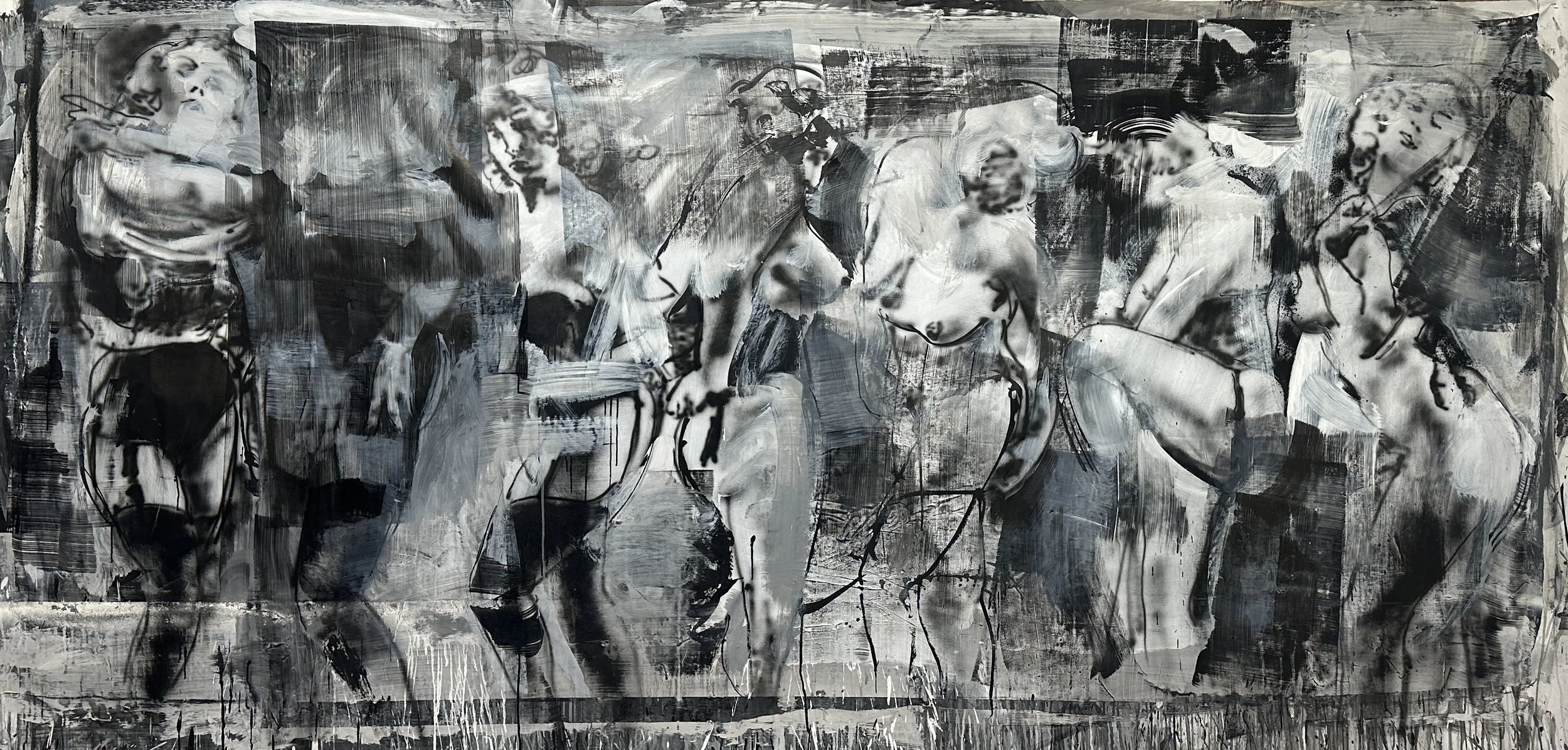
Acrylic on canvas
300cmx140cm
2026
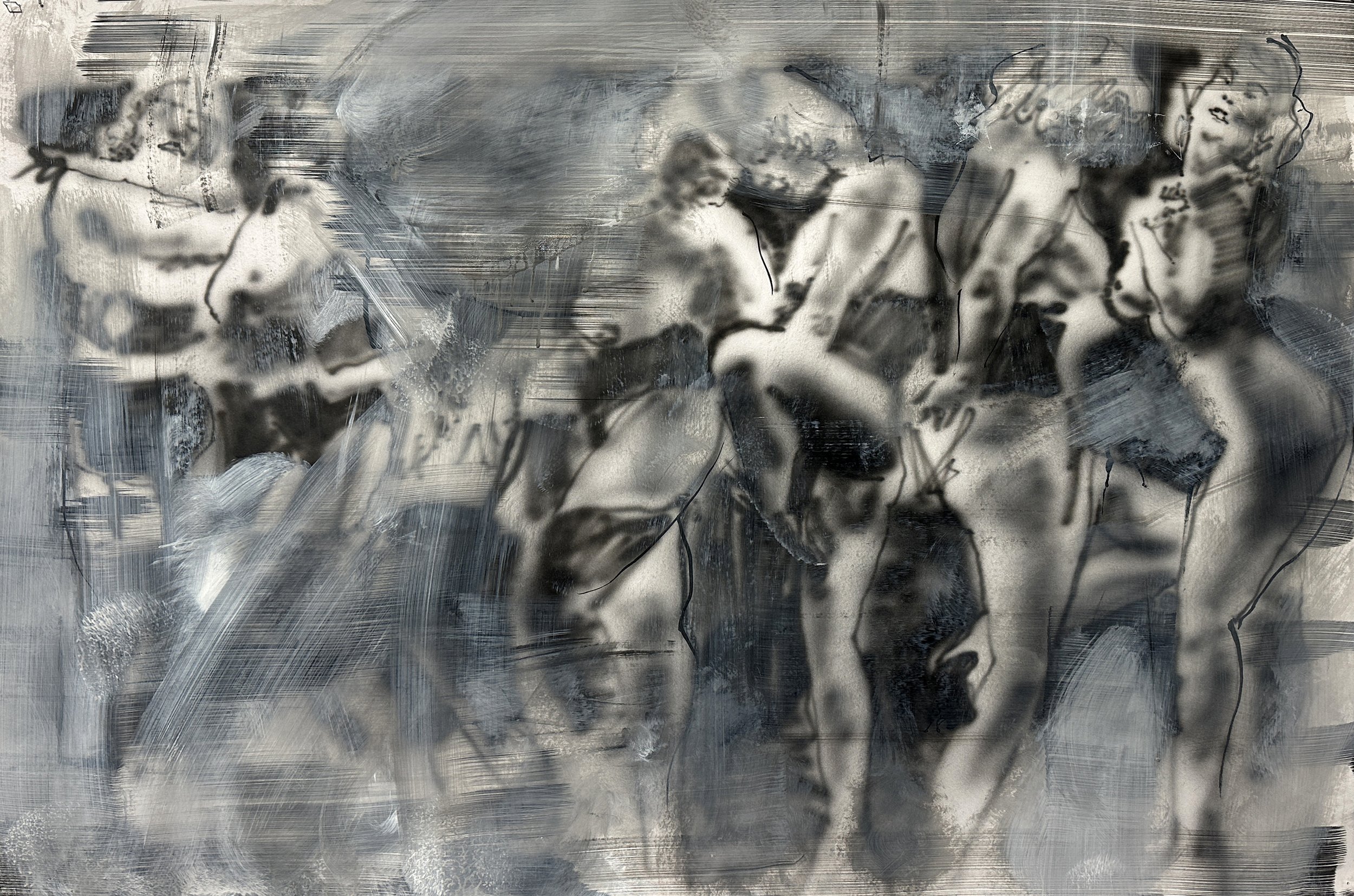
The American myth of upward mobility? or the mechanics of the consumer consumed.
Many feminist scholars argue that American capitalism and patriarchy are deeply intertwined, with the economic system actively monetizing patriarchal norms. By commodifying the female body for profit—ranging from the advertising and beauty industries to entertainment—capitalism sustains and monetises the objectification of women.
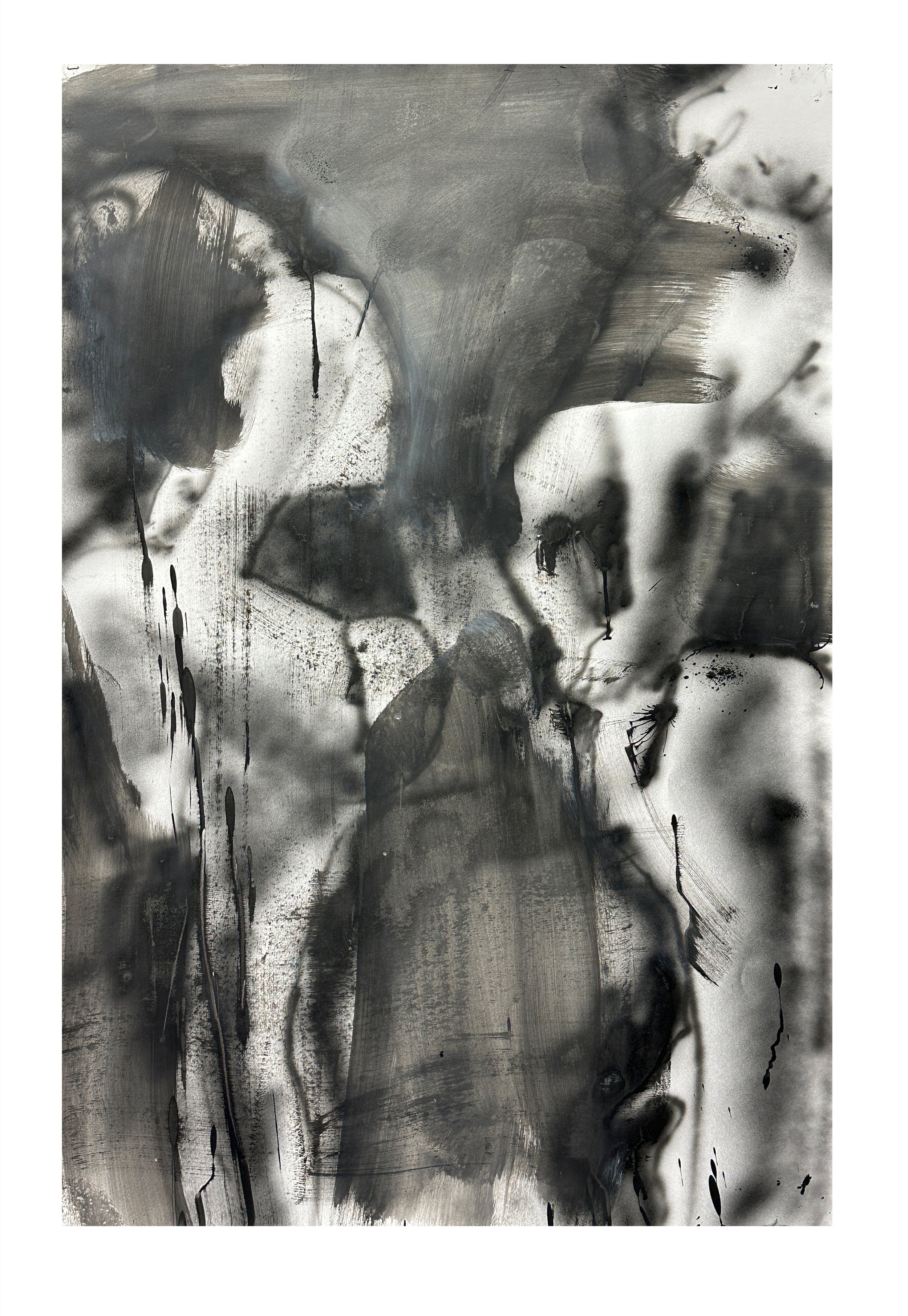
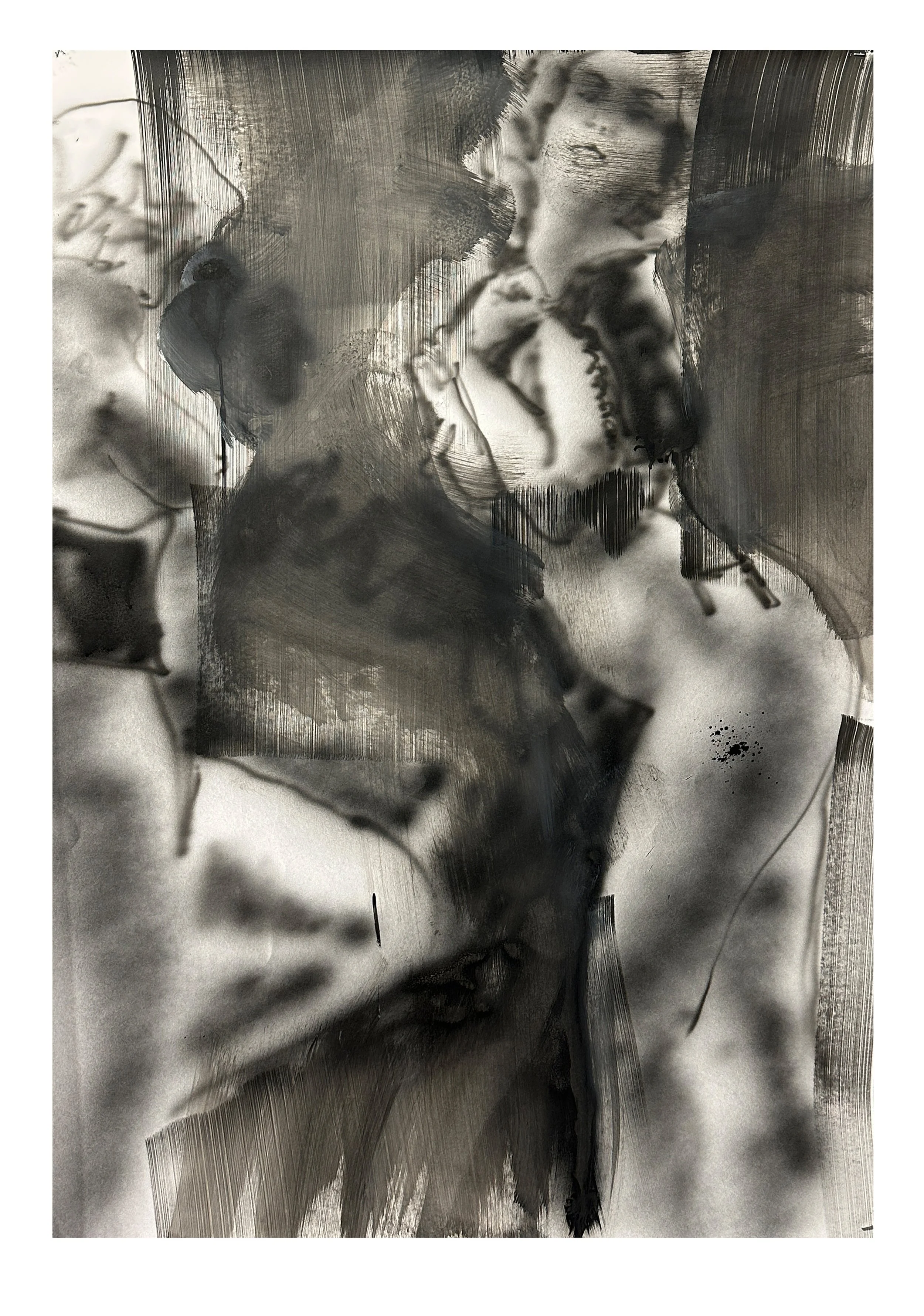
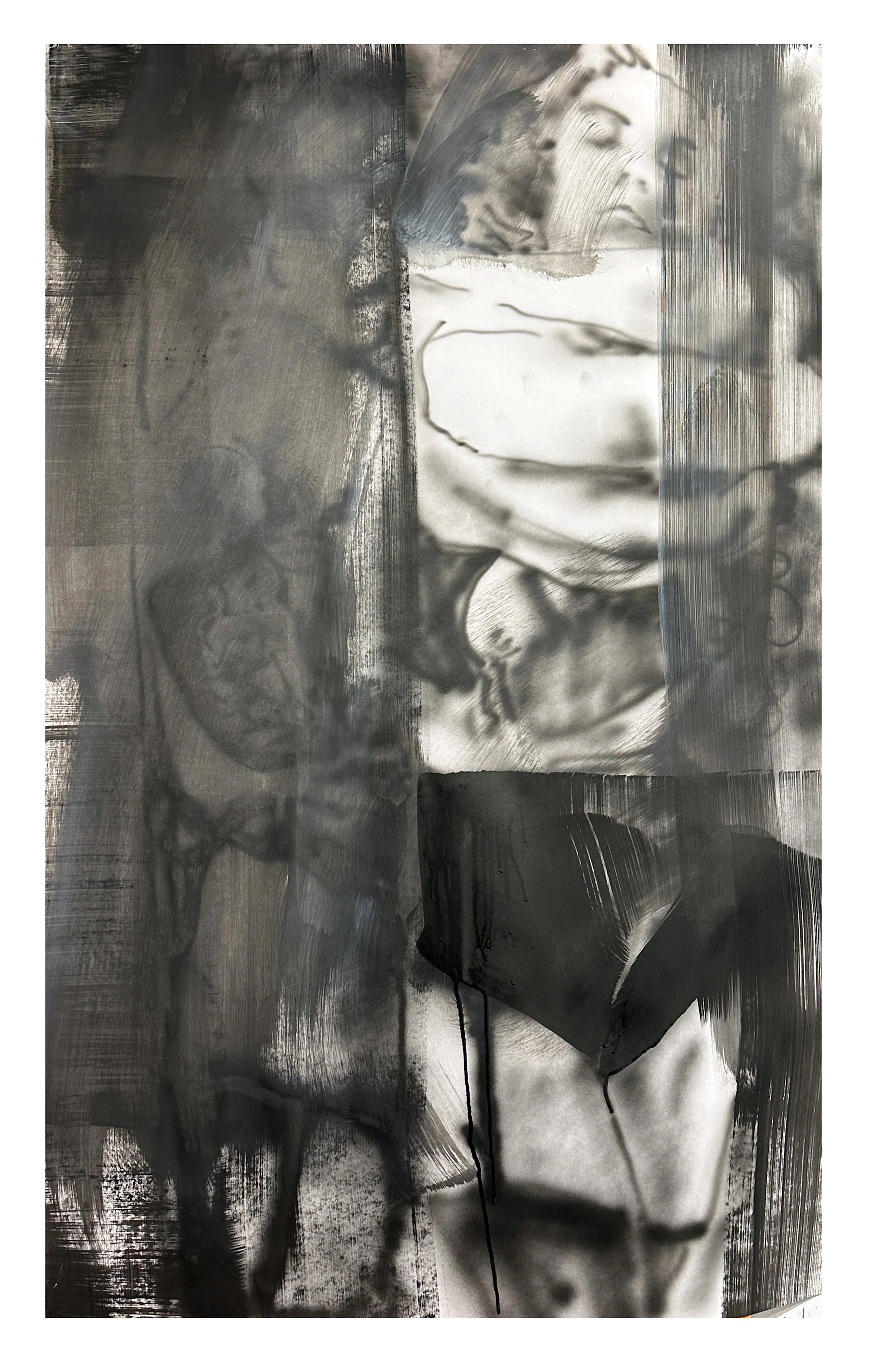
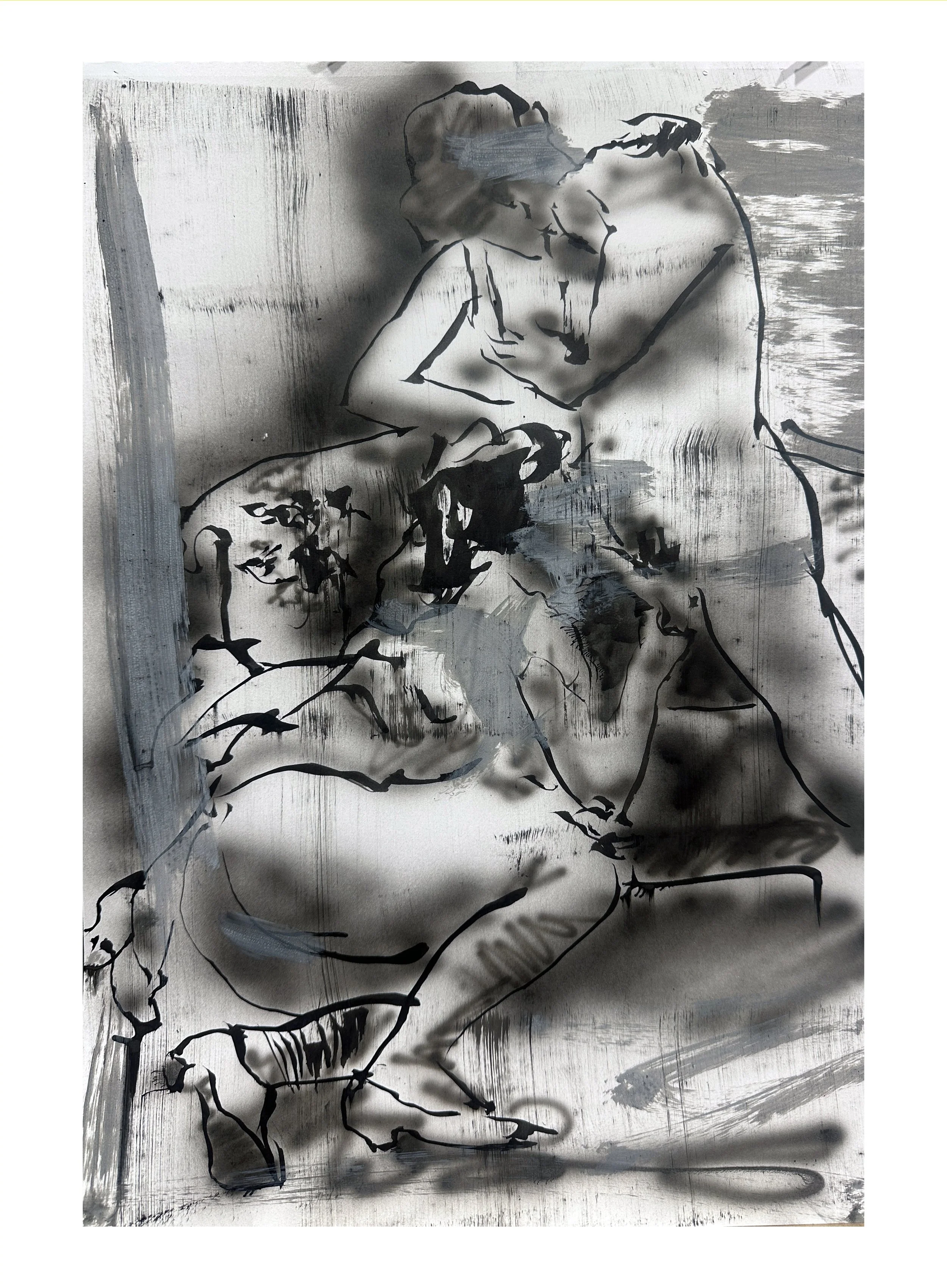
The word "pornography" comes from the Ancient Greek words: Pornē: Meaning "prostitute" or "harlot," which traces back to the Greek verb pernanai, meaning "to sell".
Graphein: Meaning "to write" or "to draw," which is the same root used for words like "biography" or "photography" .
The term first appeared in the English language in the 1840s to describe the depiction of prostitutes in ancient Greek and Roman art.
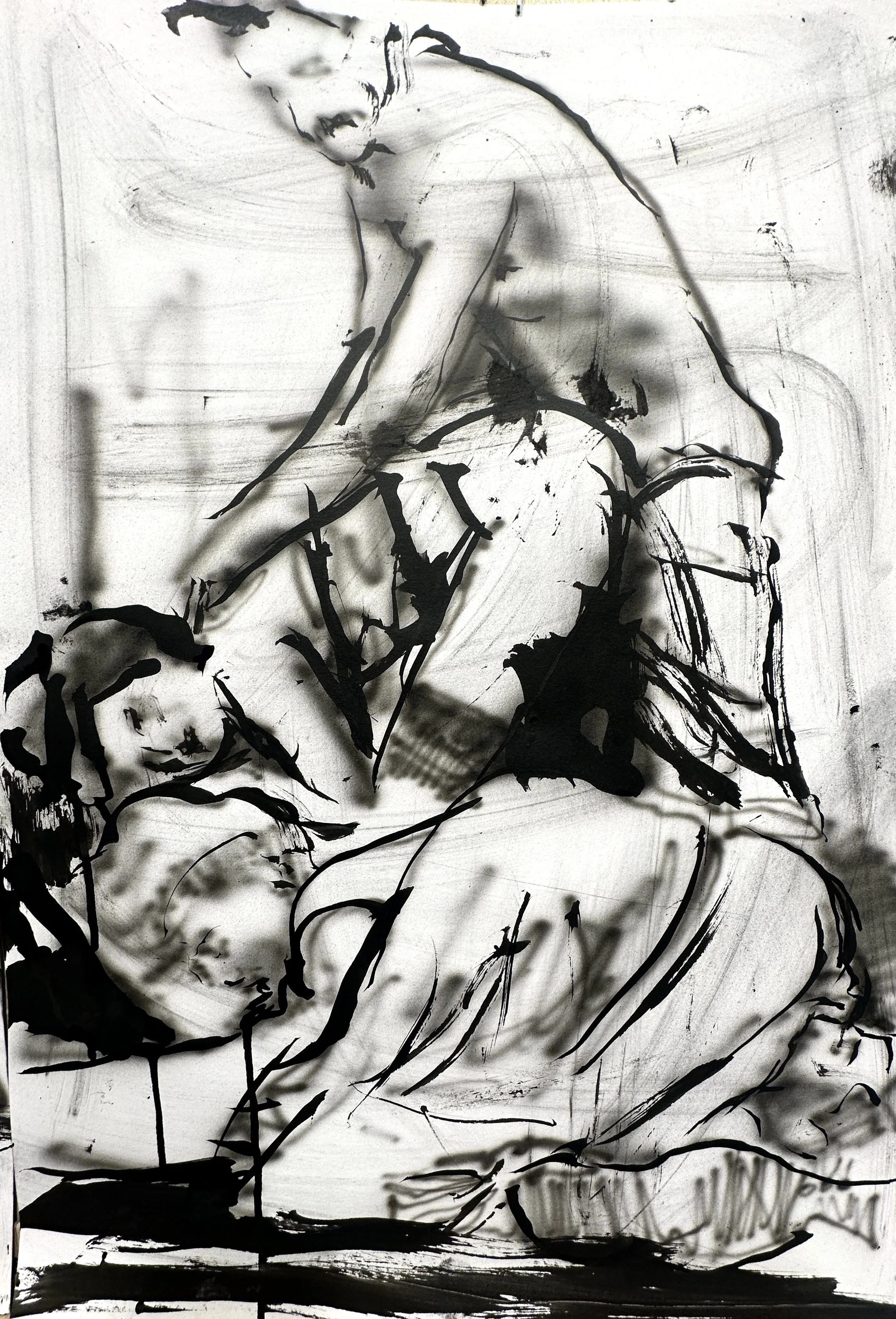
While Victorian pornography was certainly not the first commercial erotica, it marked a massive shift in how pornography was consumed. Because it coincided with the Industrial Revolution and mass literacy, it became a true industrial enterprise rather than a boutique, aristocratic trade.
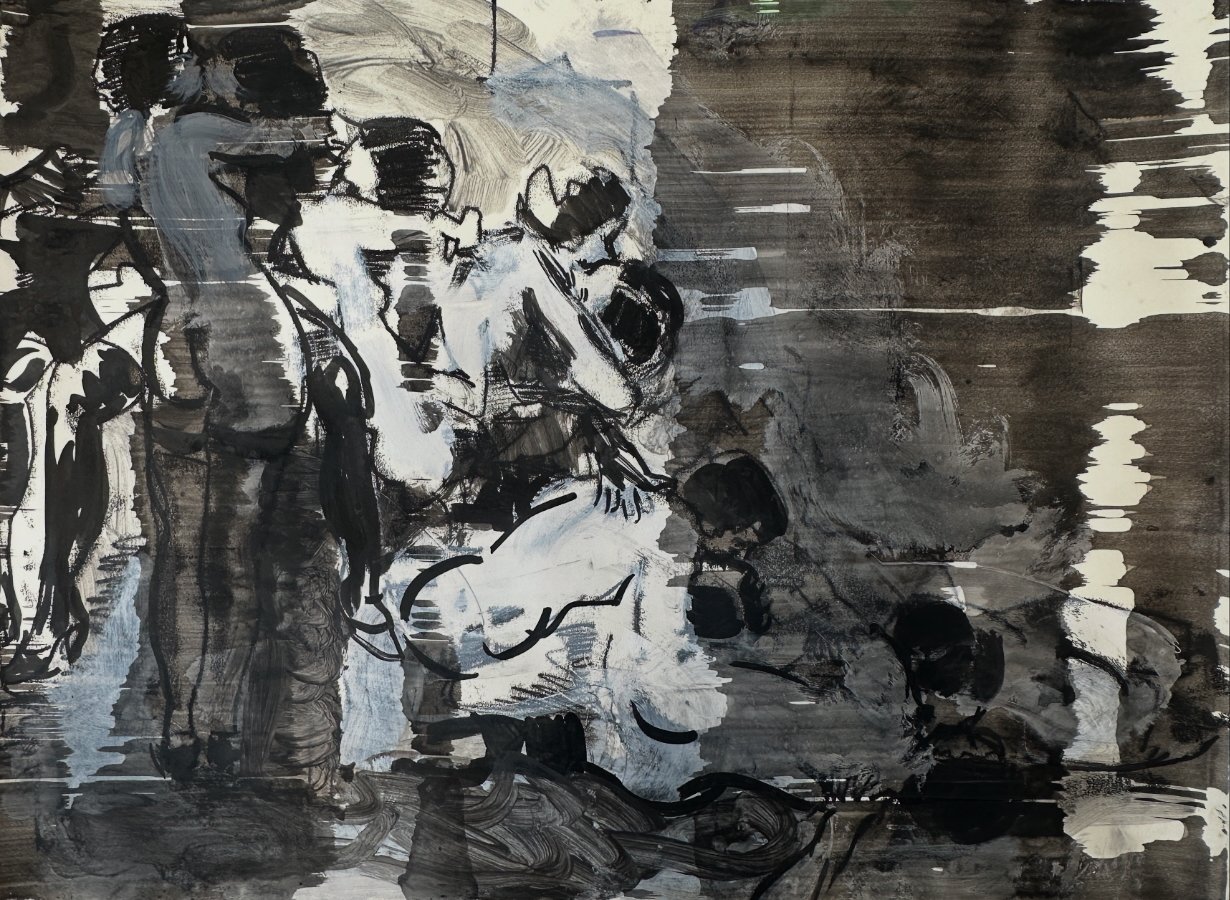
ink and acrylic
60cmx40cm
2025

120cmx150cm
acrylic on canvas
2025

190cmx230cm
acrylic, charcoal, spray paint
and oil on canvas
2025
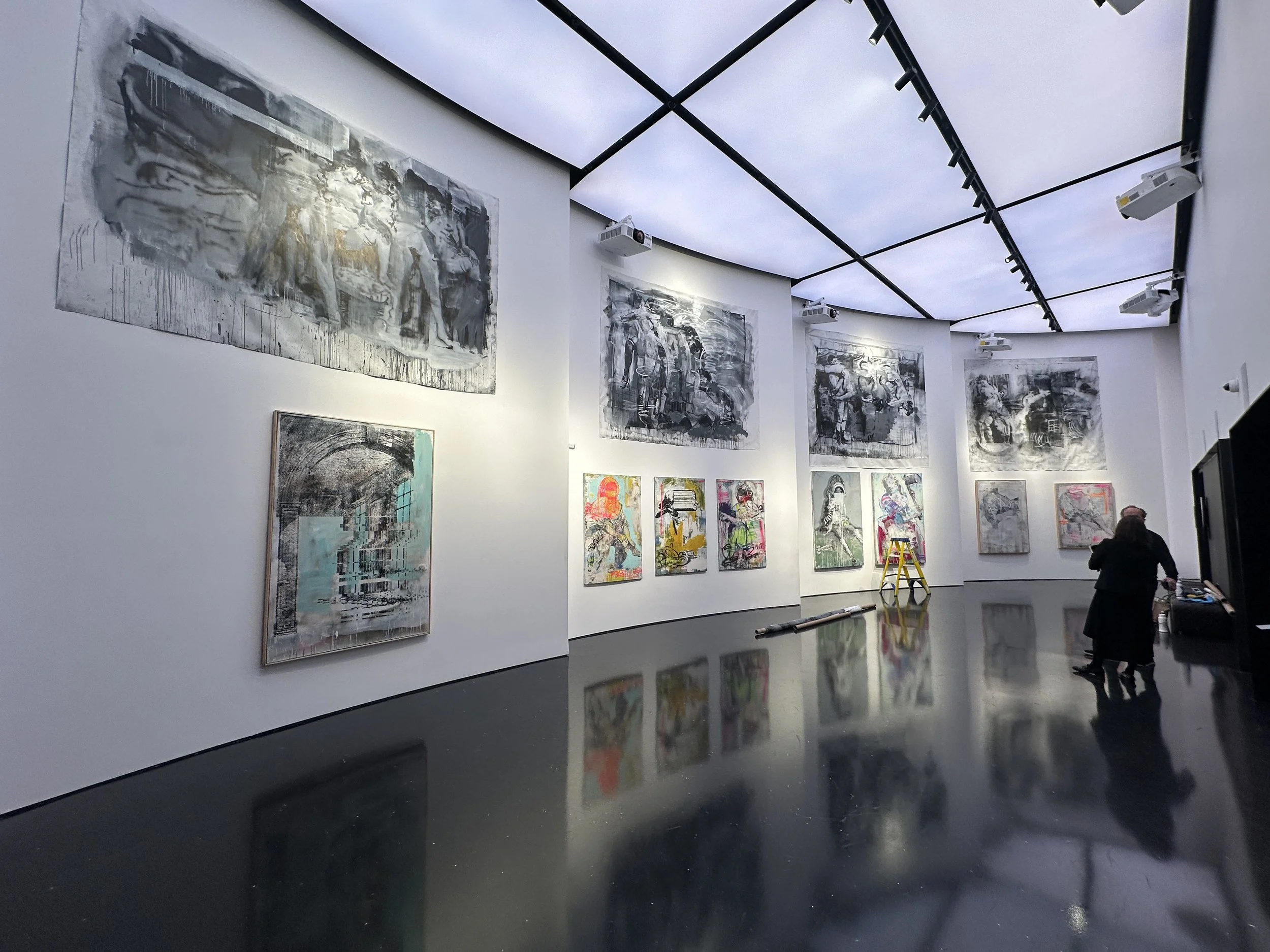

the exhibition was meant to be four large scale monochrome paintings, however, the curator chose to show another series of my work alongside the intended idea:’ The black and white paintings based on Victorian pornography were later covered over by the Hotel Gallery, they literally saw the light of day for the opening. Censored by literally covering them with blank white paper and then they projected older work of mine over the top. It seems a group of lawyers wanted to hold a business event in the gallery space and my paintings were deemed too offensive….for lawyers. The Art Otel is built on the same spot that used to be The Foundry in Shoreditch once a space for creative diversity and experiment now a church of conservatism.
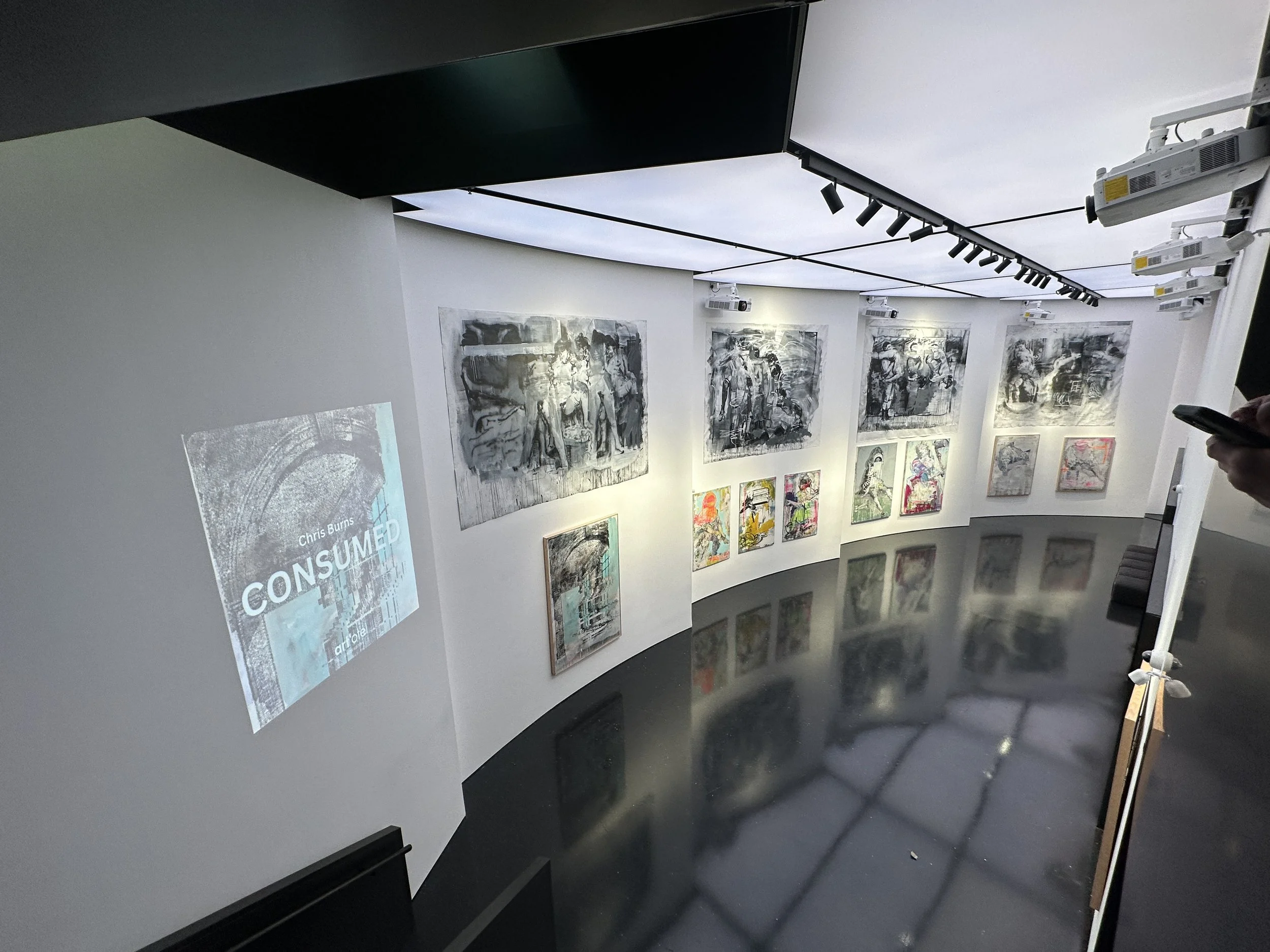
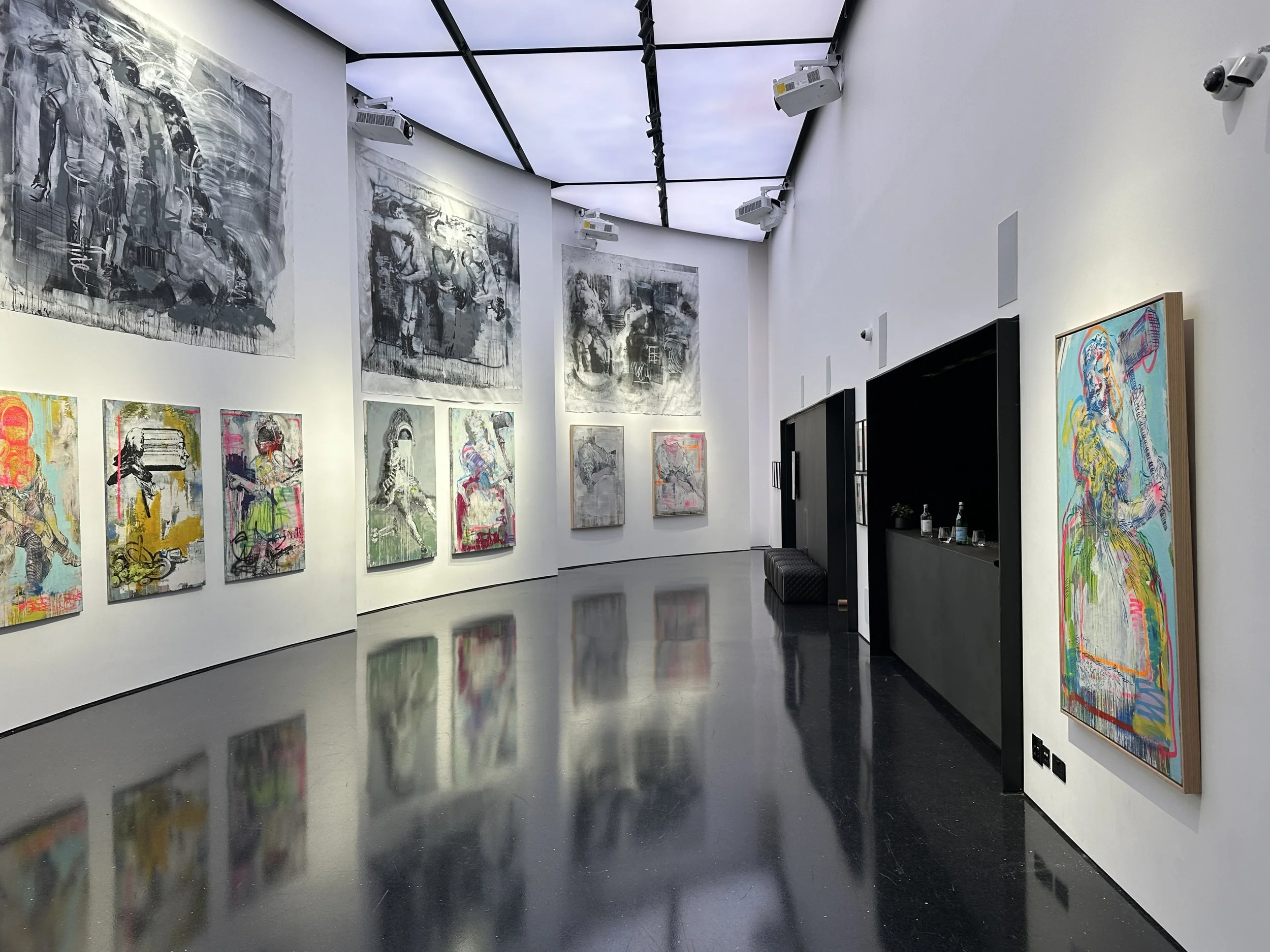
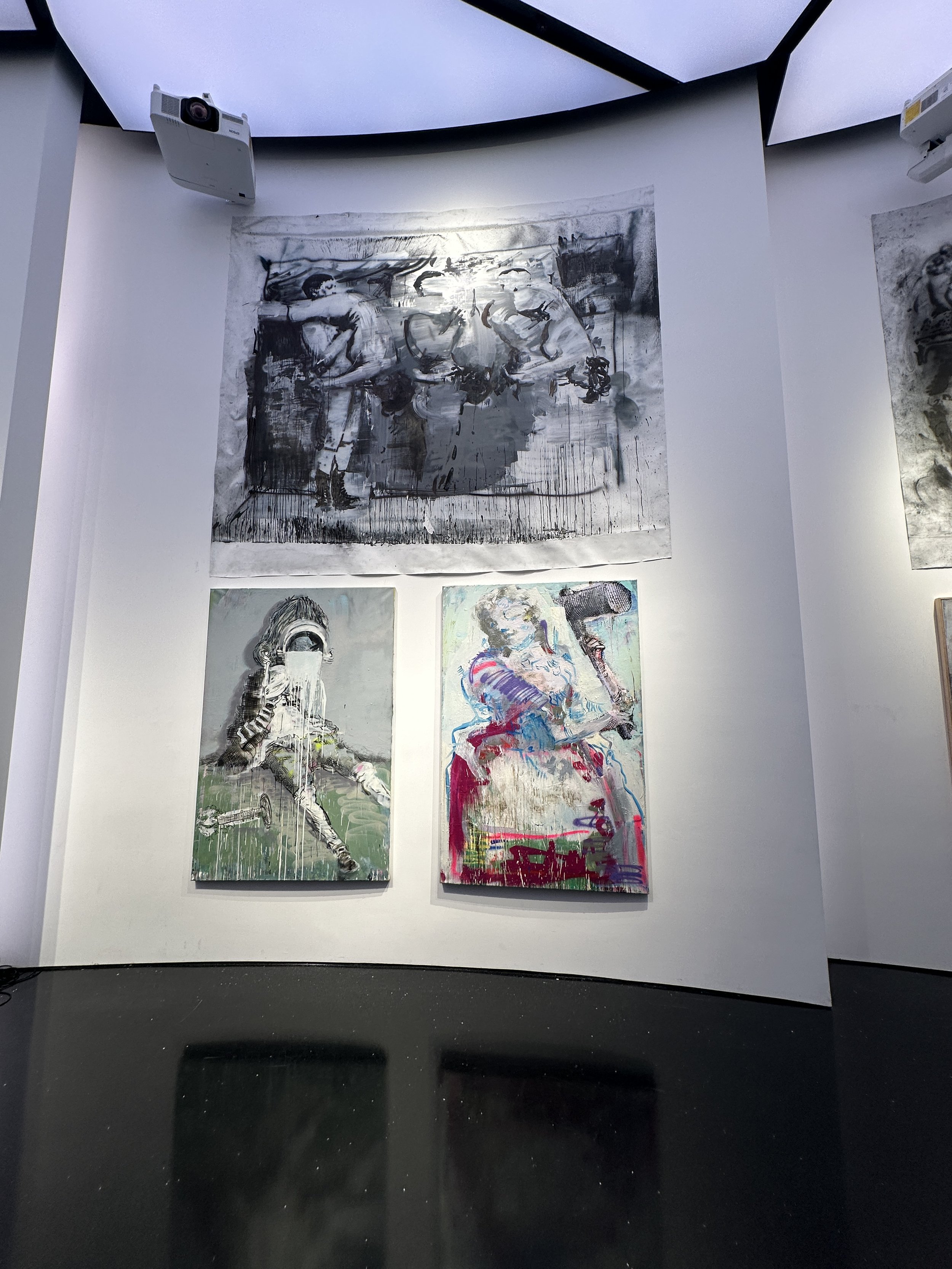
The exhibition at the Art Otel Hoxston (in conjunction with the Hoxston fortnight) was meant to be 4 large scale black and white recent paintings. The curator, weary of the Hotel owners Christian beliefs and his history of censoring the gallery, decided to put the paintings above eye level and then use older paintings from my series ‘Progress’ along the base, at eye level. Later the gallery covered over the black and white paintings meant for the original exhibition, with large sheets of white paper deeming them too explicit. Finally, in this complex solution of censorship they projected earlier works of mine over the top. The whole act perfectly illustrating a new conservatism.
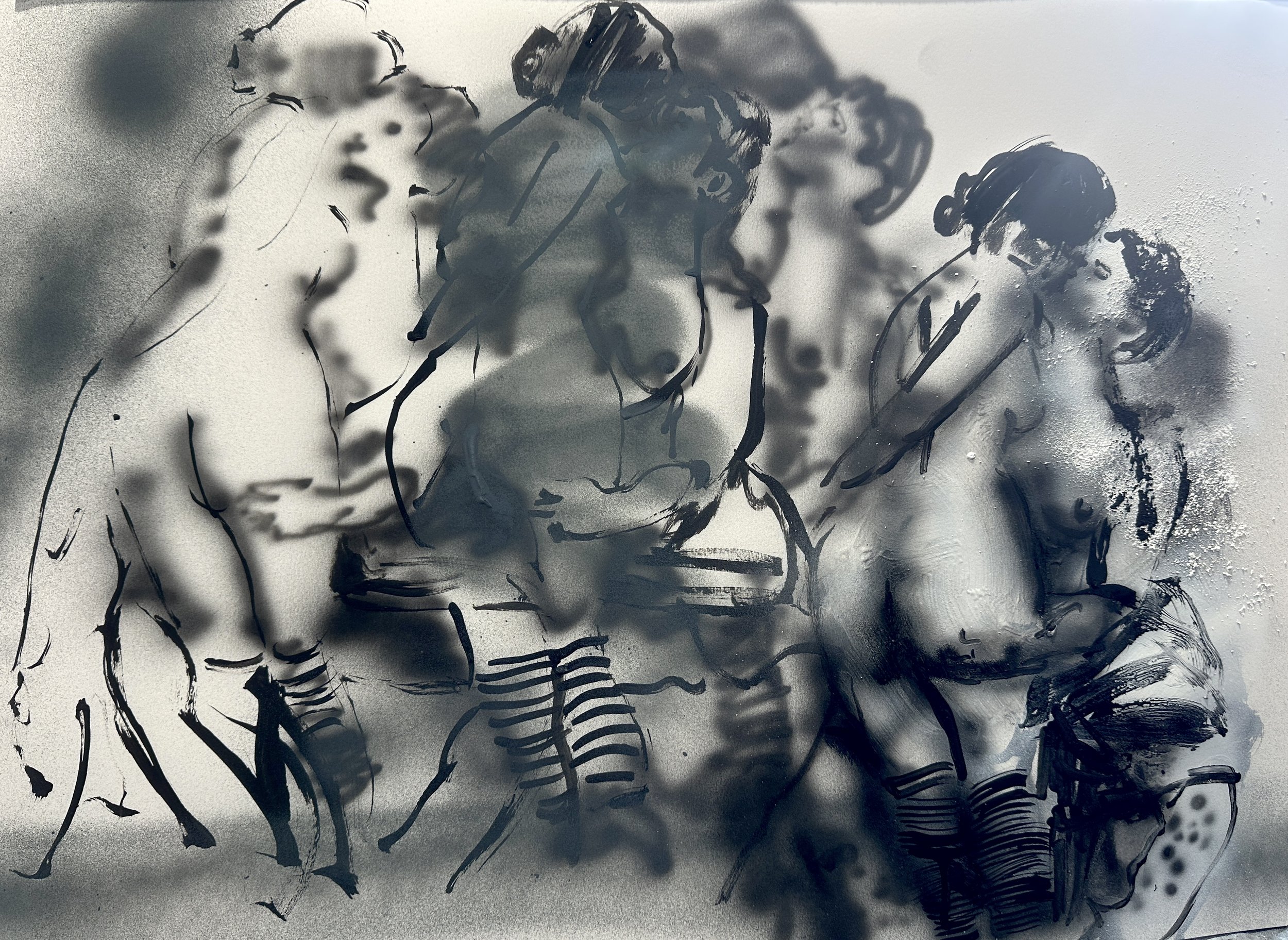
ink and spray paint
2025
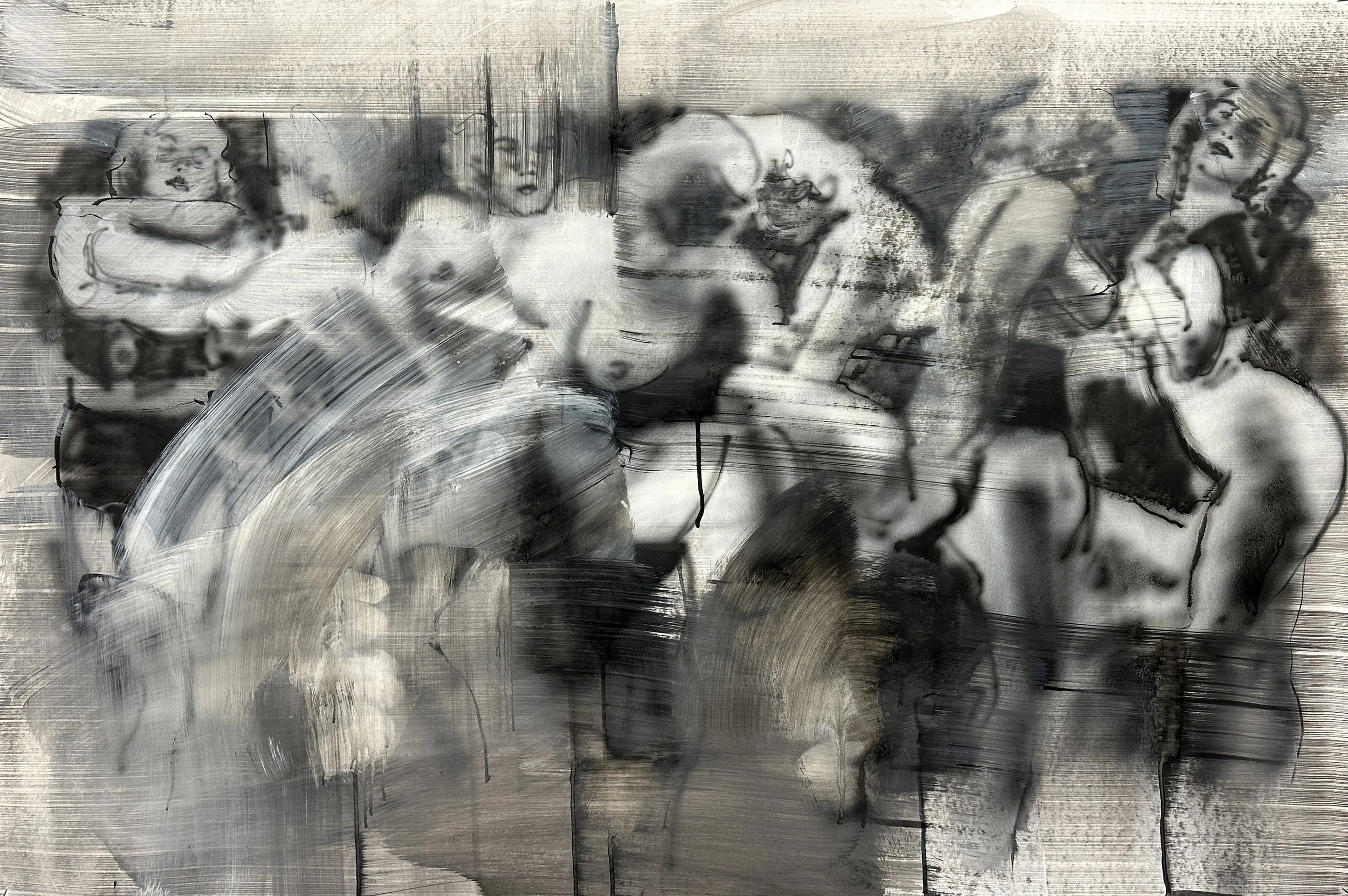
ink and acrylic on paper
120cmx80cm
2026
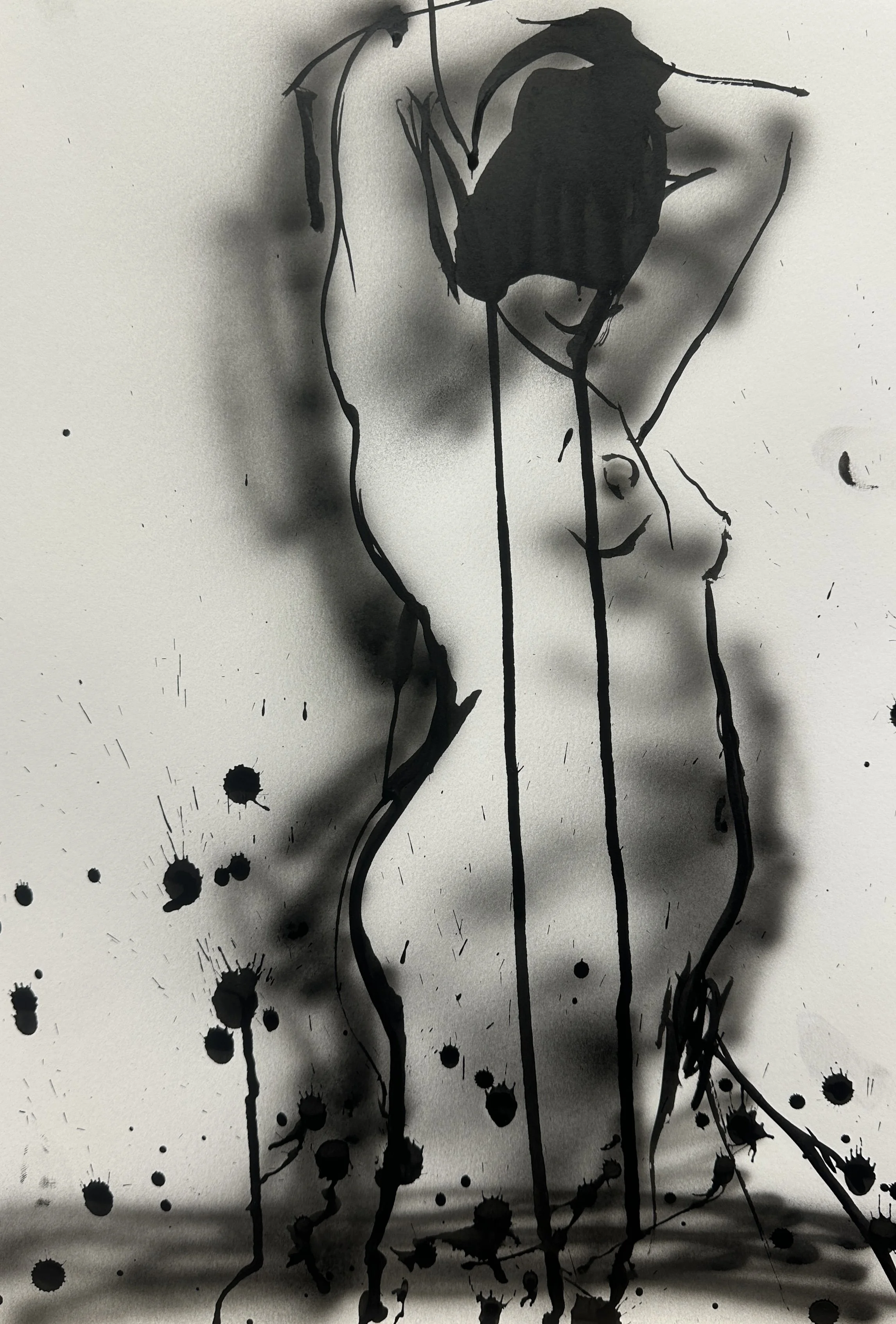
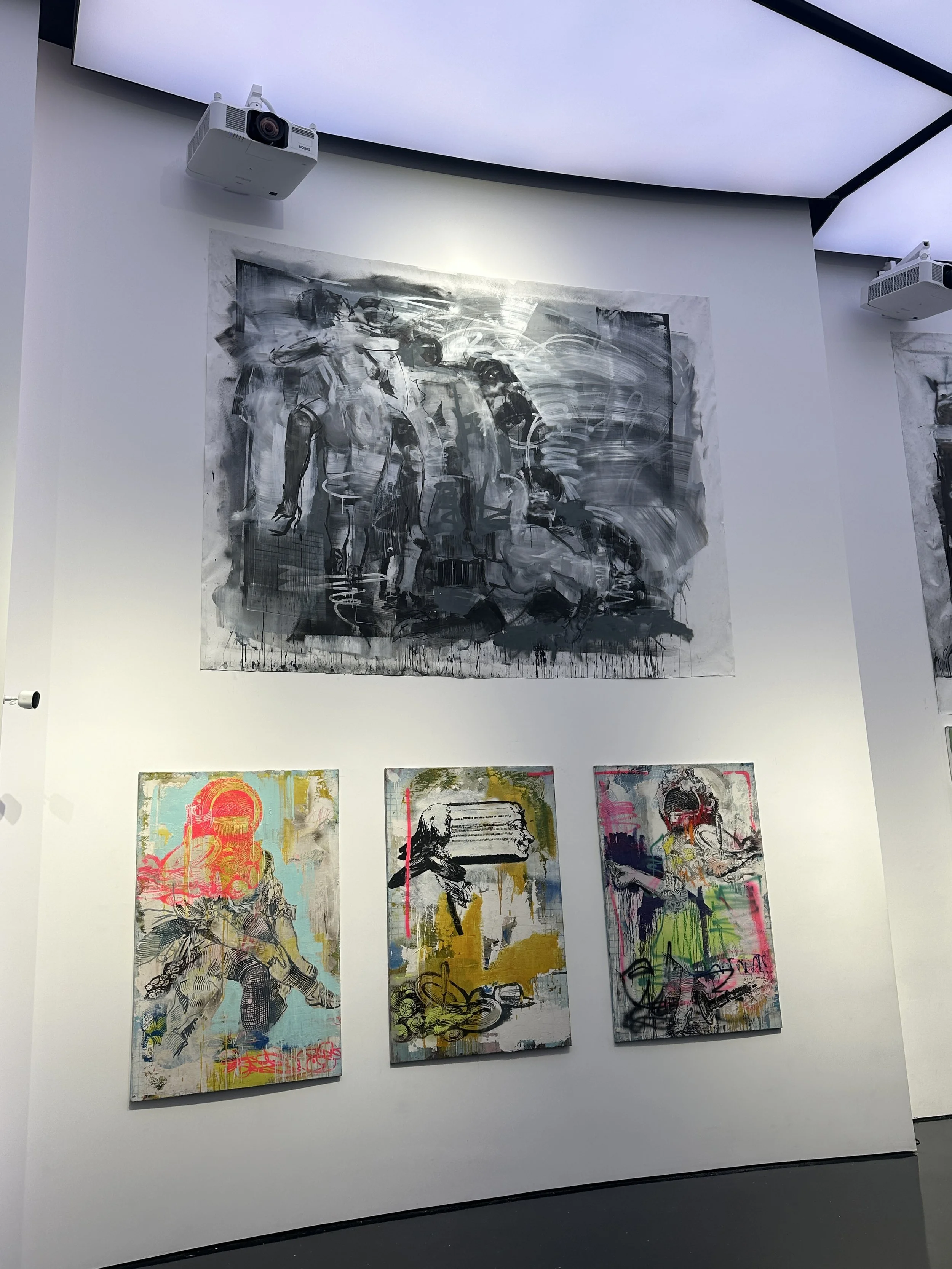
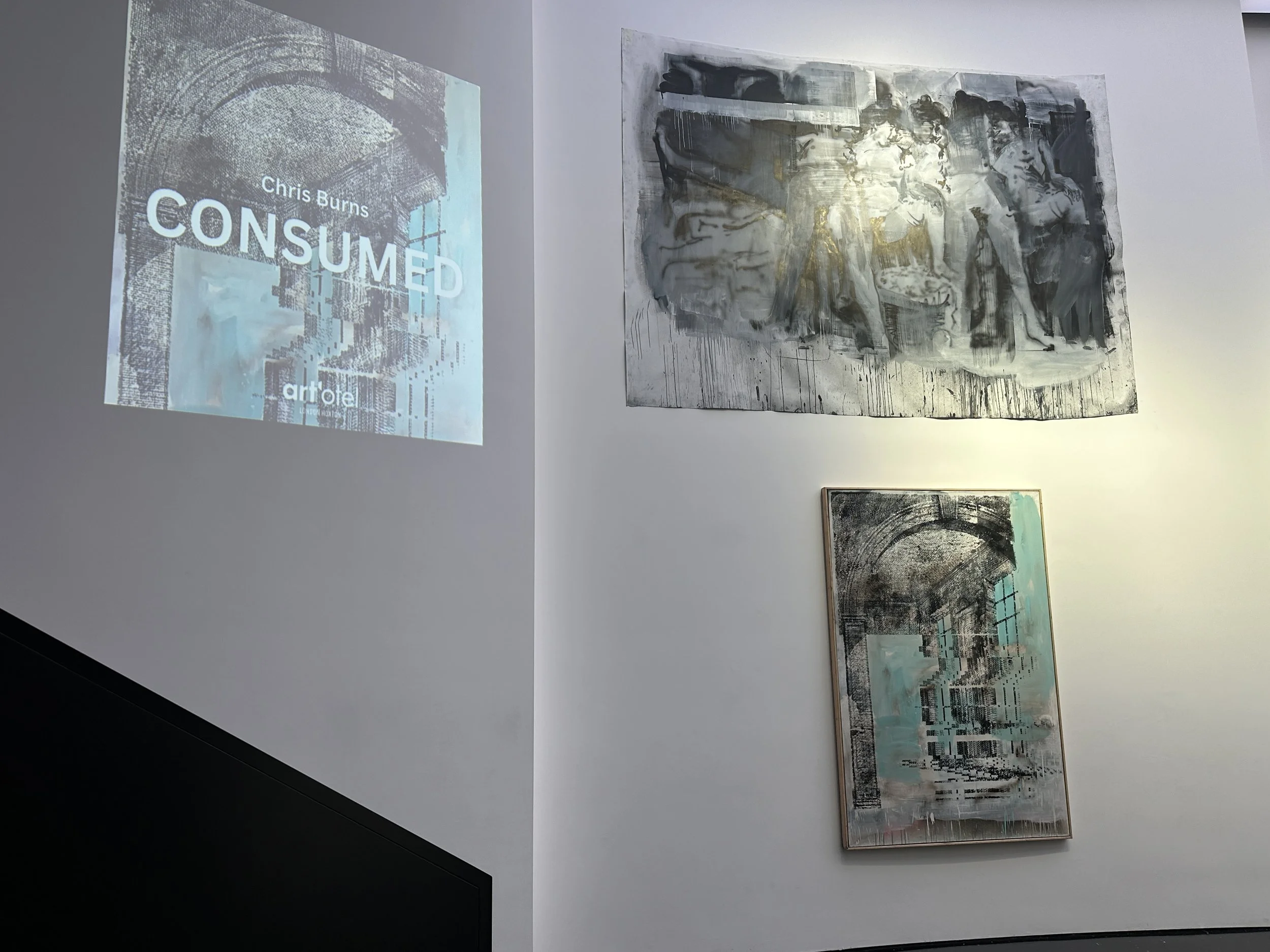
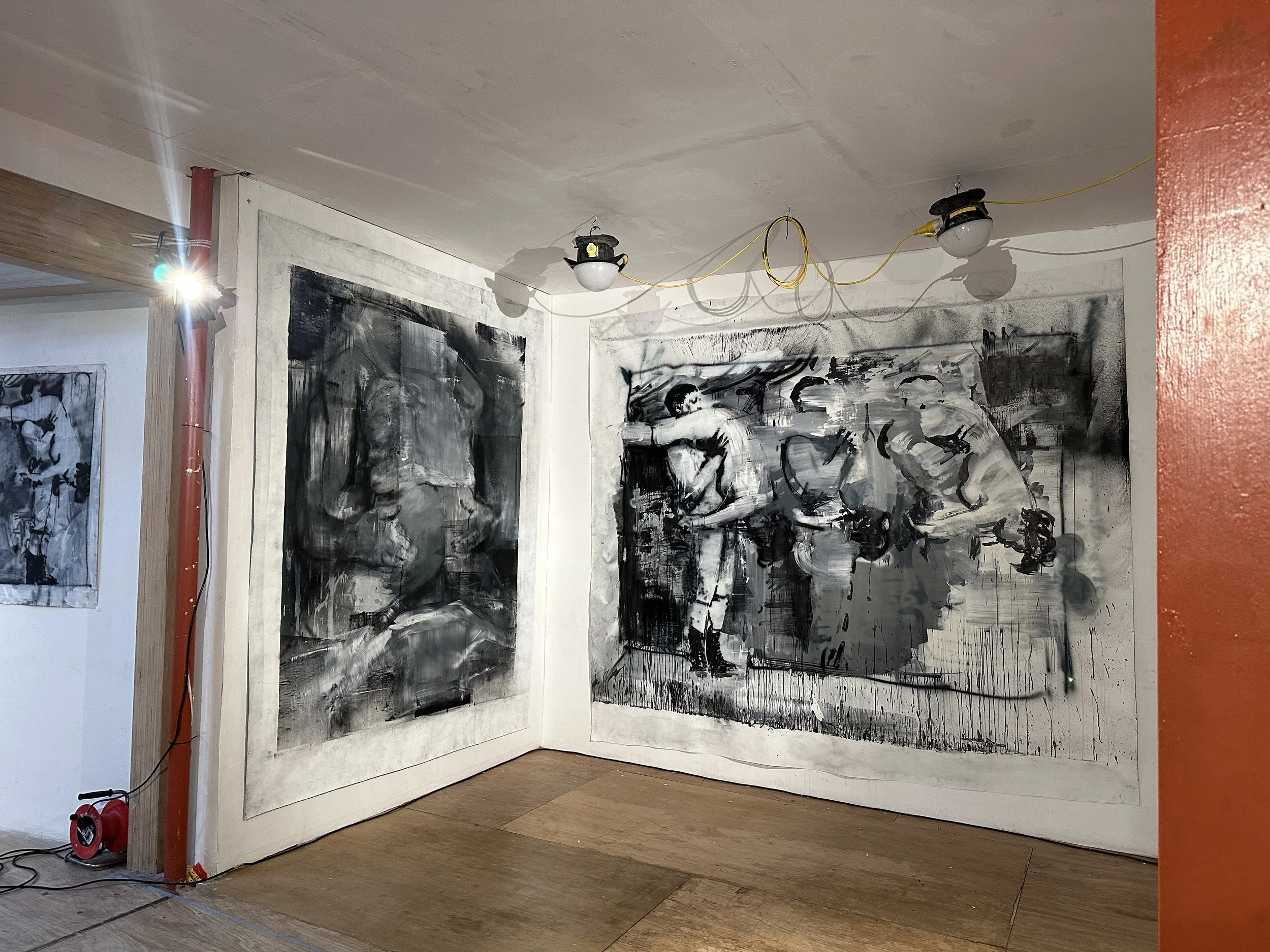
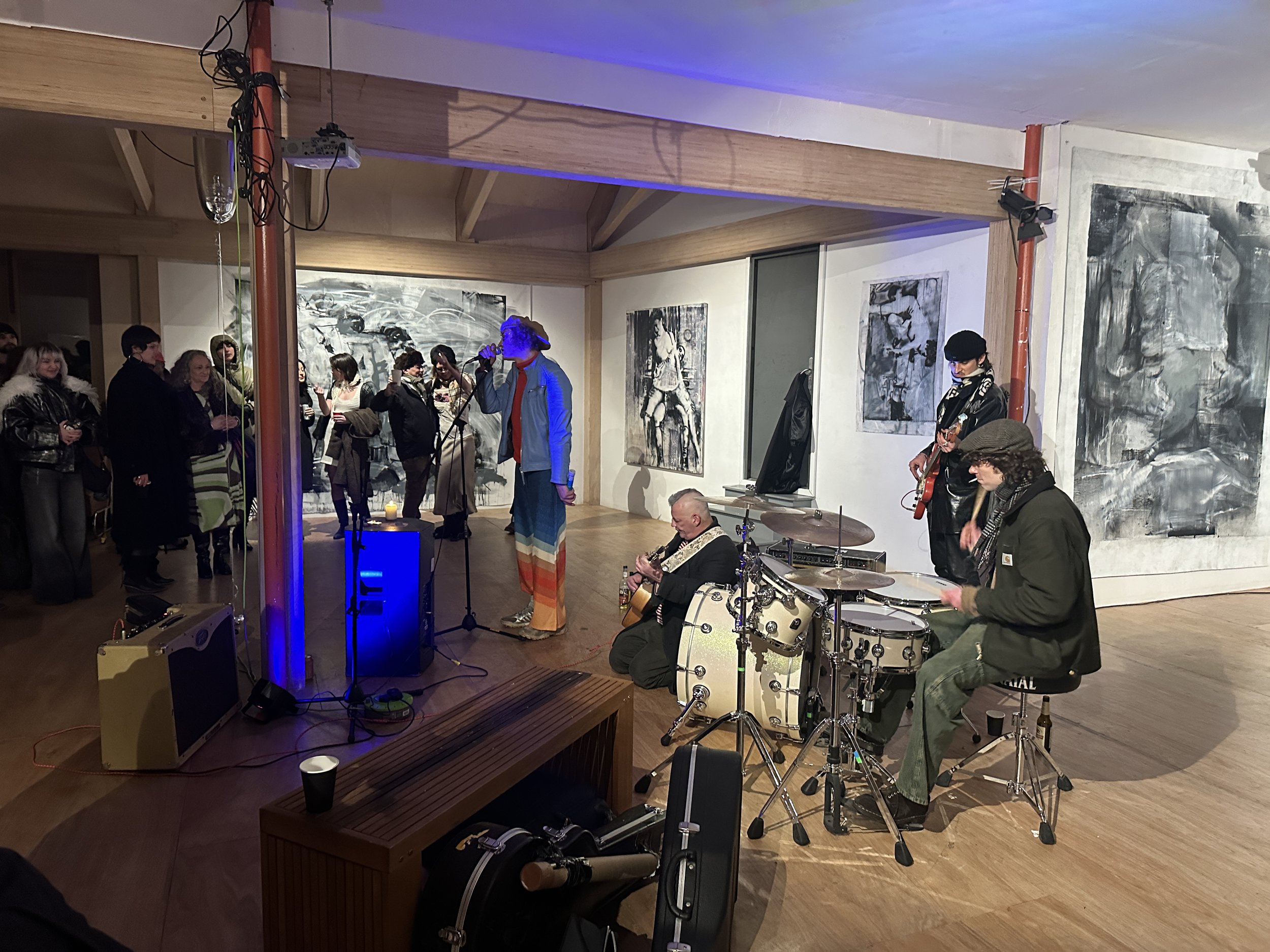
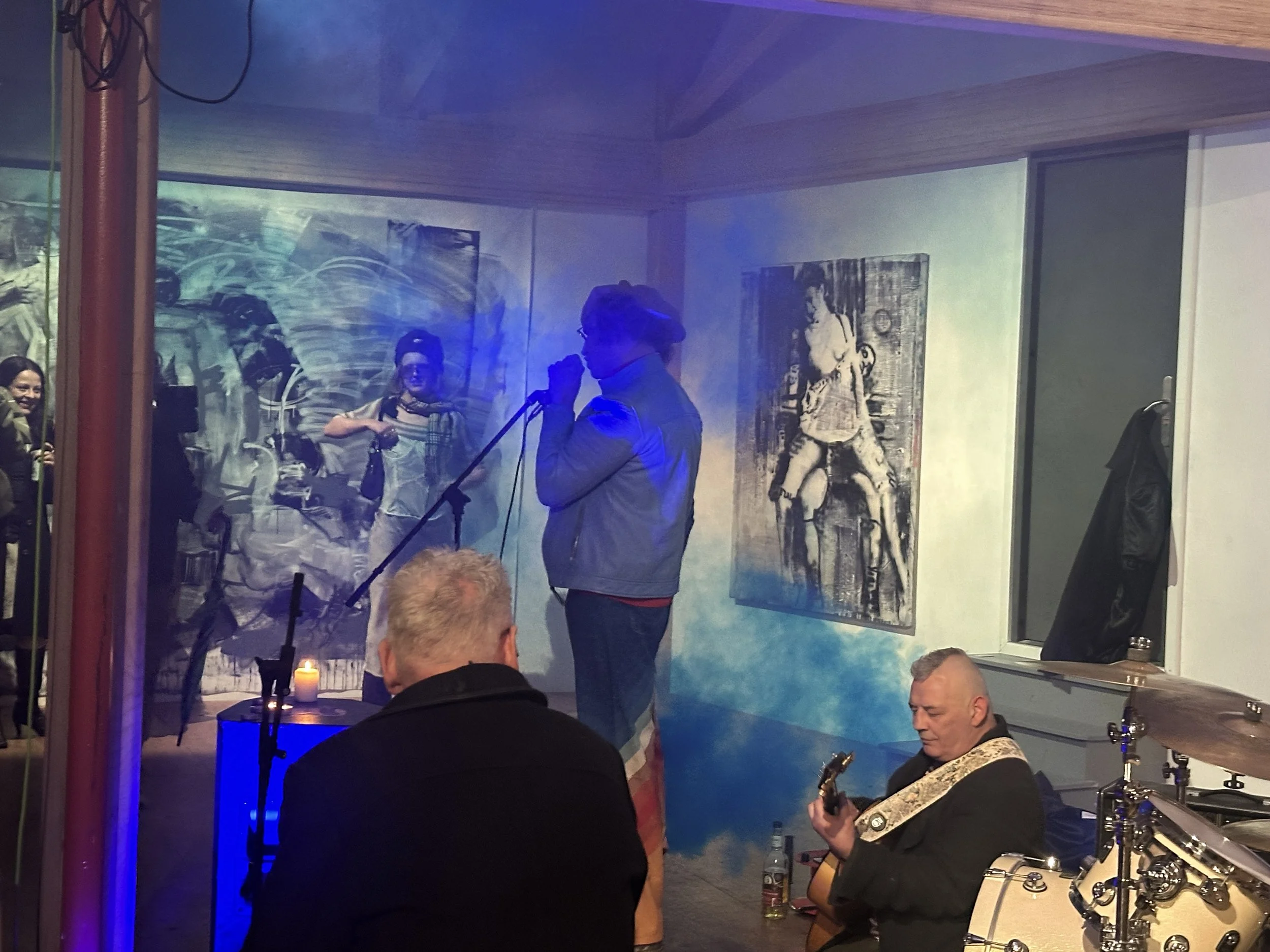
The series of paintings censored at the Art Otel Gallery were later shown at a private party in London held at the Farsighted Collective Gallery
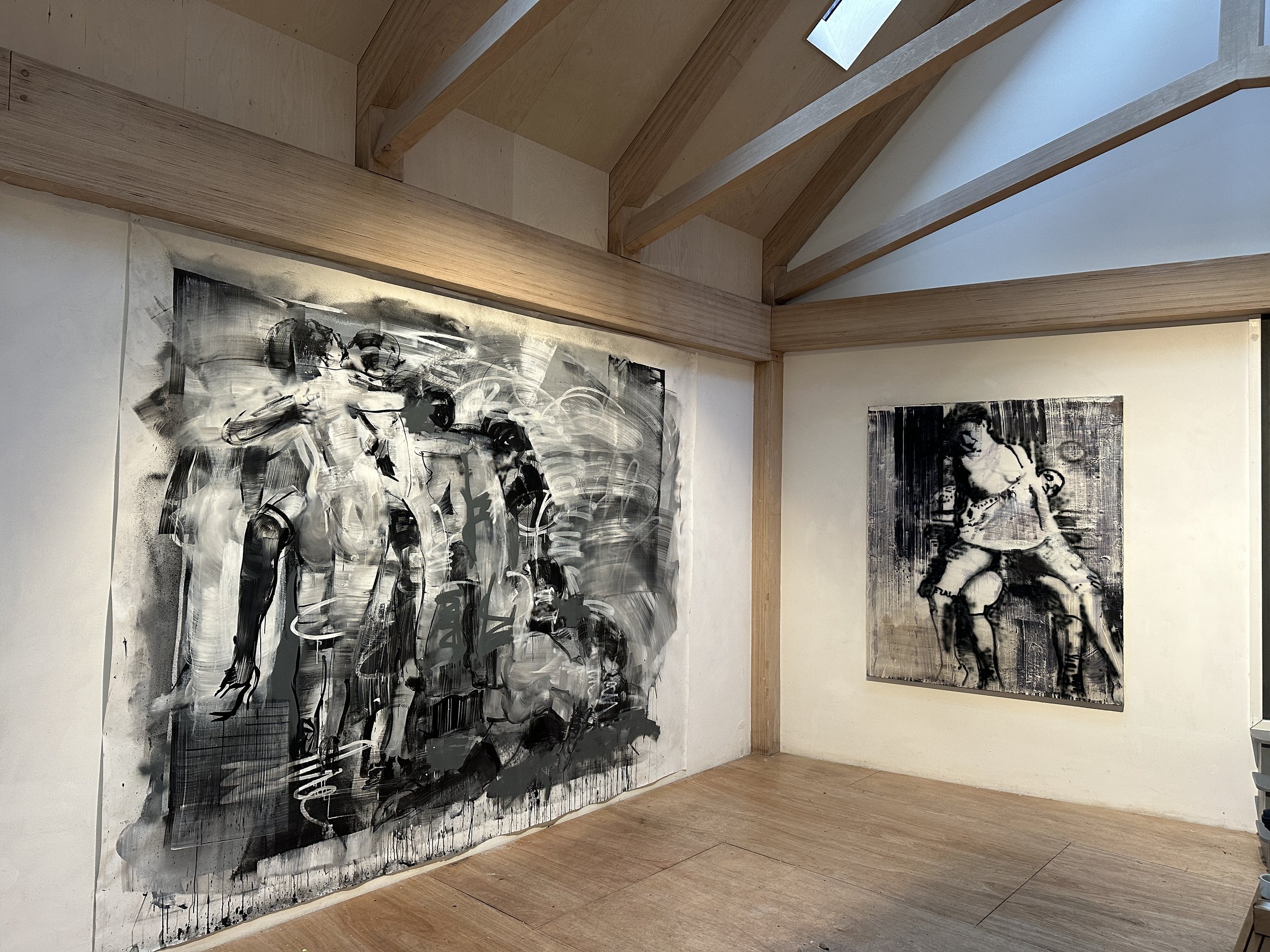
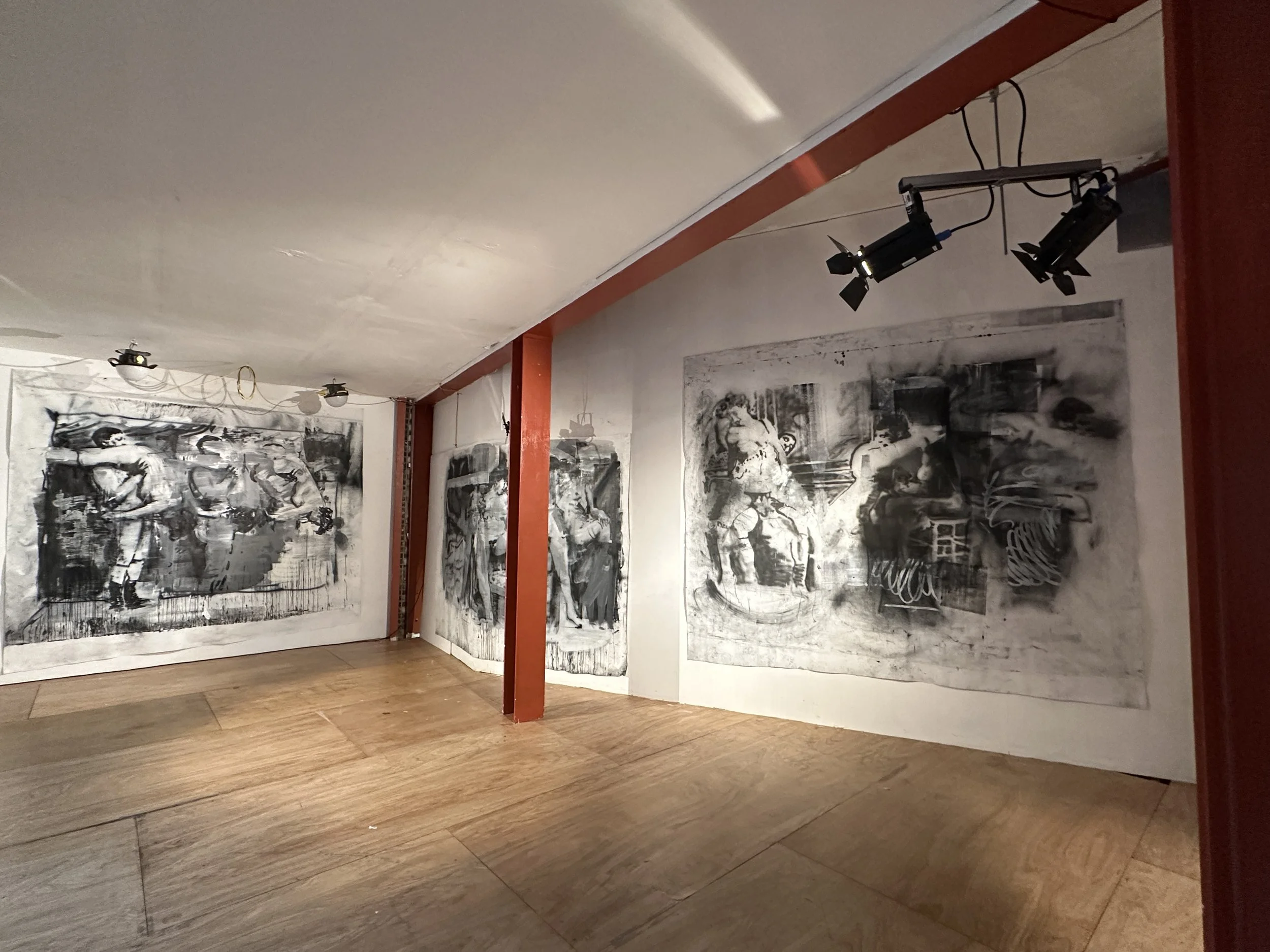

Interview made for the exhibition ‘Consumed’